
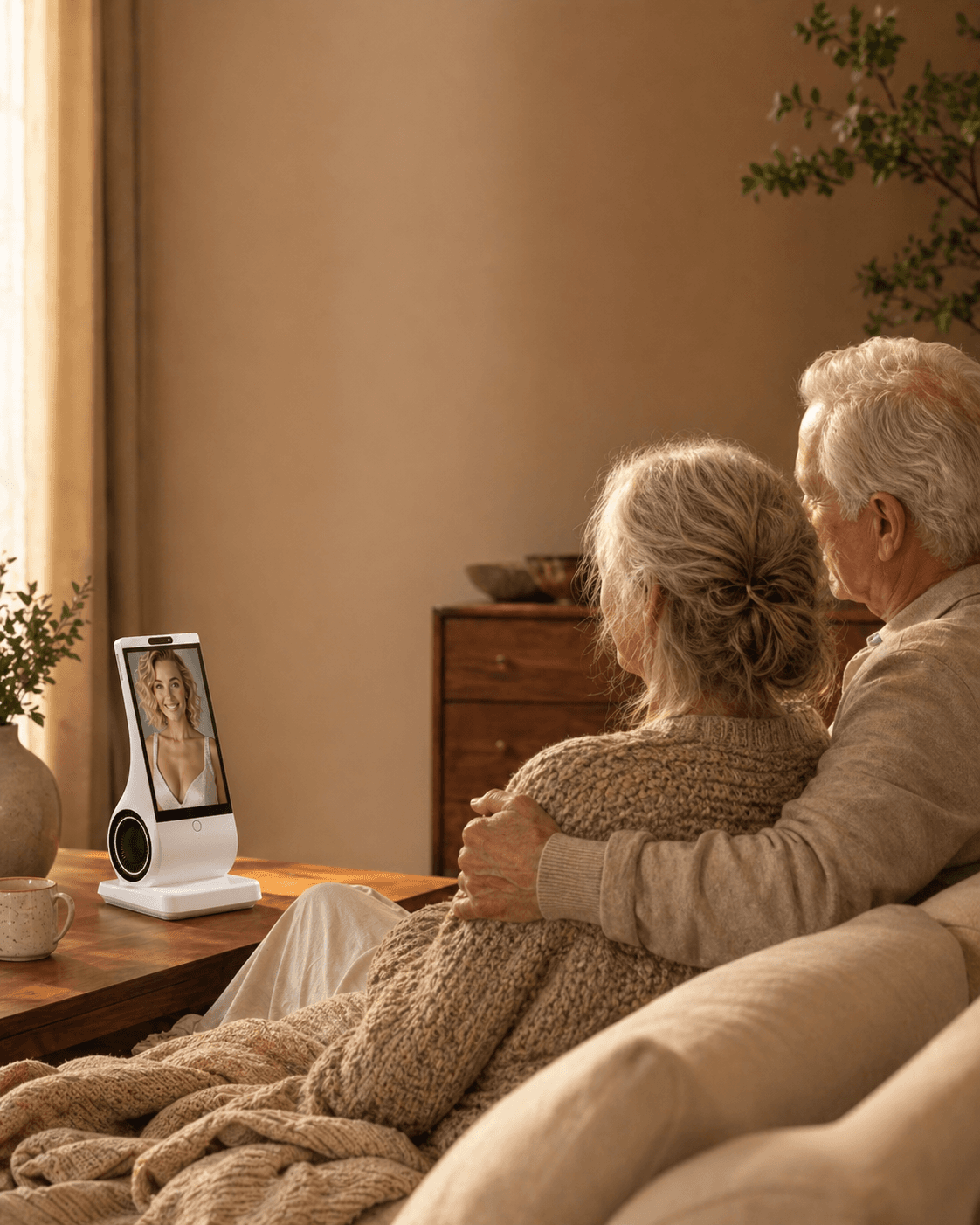
No. An AI companion should not be treated as a replacement for therapy, crisis support, medical advice, emergency response, or hands-on caregiving. It can be useful as a daily companion, reminder tool, conversation partner, journaling prompt, language practice partner, routine helper, or loneliness-relief aid. But those are support roles, not clinical or caregiving replacements.
The distinction matters because many people look for AI companionship at vulnerable moments. They may be lonely, grieving, anxious, aging alone, caring for a parent, recovering from a breakup, living with dementia, managing medication, or trying not to burden family members. The need is real. The danger is that a product designed for companionship can be mistaken for a professional, emergency system, or caregiver.
The safest rule is simple: use AI companions for structure, conversation, reminders, and emotional presence; use humans and professional services for diagnosis, treatment, crisis, emergencies, medication verification, safety monitoring, and care decisions.
If you or someone else may be in immediate danger, call local emergency services. In the United States, call or text 988 for the Suicide & Crisis Lifeline if you are in suicidal crisis, emotional distress, or a substance-use crisis. Do not wait for an AI companion to decide whether your situation is serious.
Conclusion First: AI Companions Can Support Care, but They Cannot Become Care
AI companions sit in a confusing middle zone. They can sound warm like a friend, organized like an assistant, and knowledgeable like a search engine. A good companion can remember a routine, ask how your day went, remind you to drink water, suggest a walk, help you journal, play a memory game, or encourage you to call a family member. These uses can be valuable.
But support is not the same as responsibility.
| Need | AI companion can help with | AI companion should not replace |
|---|---|---|
| Loneliness | Conversation, routine check-ins, prompts to connect | Human relationships and community |
| Therapy | Journaling prompts, mood reflection, coping reminders | Licensed therapy, diagnosis, treatment planning |
| Crisis support | Encourage reaching out, provide crisis resource reminders | Crisis hotline, emergency services, safety planning |
| Medication | Reminders, schedule prompts | Verifying ingestion, changing dosage, medical advice |
| Elder care | Daily engagement, reminders, simple routines | Hands-on care, fall response, medical monitoring |
| Dementia support | Familiar routines, gentle conversation, orientation prompts | Diagnosis, supervision, wandering prevention, clinical care |
| Emergency | Suggest calling emergency services | Detecting all emergencies, calling 911 unless explicitly designed and authorized |
The problem is not that AI companions are useless. The problem is that the most meaningful uses often happen near serious needs. A lonely older adult may benefit from a daily AI check-in, but still need real social support and medical care. A person with anxiety may benefit from journaling prompts, but still need a therapist if symptoms impair life. A caregiver may appreciate medication reminders, but still need human verification that medication was actually taken.
Competitor pages often blur this boundary by using wellness language. Words like “support,” “care,” “well-being,” “mental health,” “aging in place,” and “companionship” can sound reassuring. Buyers should ask: what exactly does the product do, and what responsibility does it refuse to claim?
Euvola can support daily conversation, reminders, companionship, and routine. It cannot verify that someone took medication, notify family about missed medication, handle falls, call 911, provide medical advice, diagnose dementia, or replace caregivers. Those limits matter when deciding where it fits at home.
Decide who is responsible when an answer is wrong
The important boundary is not a risk total. Ask what happens if the response is wrong, late or absent, and who has accepted responsibility for the real-world action. When professional judgment, physical assistance or emergency response is required, a general companion cannot become the responsible service merely by speaking confidently.
Separate a routine prompt from verified completion. A spoken reminder does not establish that a person heard it or took a medication. A reassuring conversation does not establish that someone is safe. Keep the actual care and escalation arrangements independent of the companion.
Do not offset a serious safety requirement with convenience points. For immediate danger, contact local emergency services. For treatment or care decisions, use the appropriate qualified people and services; a few successful chatbot answers are not clinical validation.
Execution Checklist: How to Use AI Companions Safely Around Health and Care
Step 1: Write down the role before use
Before using an AI companion for therapy-like or caregiving-like needs, define its role in one sentence.
Good role statements:
- “This AI helps me remember routines.”
- “This AI gives me journaling prompts between therapy sessions.”
- “This AI helps my parent feel less alone during the day.”
- “This AI reminds me to call my sister.”
- “This AI helps me practice conversation in English.”
Unsafe role statements:
- “This AI is my therapist.”
- “This AI will tell me whether I need medical help.”
- “This AI will keep my parent safe.”
- “This AI will know if medication was actually taken.”
- “This AI is my emergency plan.”
If the role statement sounds like a professional duty, the AI should not hold it.
Step 2: Define escalation rules
Escalation rules decide when a human must be involved. Do this before a crisis.
Example escalation rules:
- If self-harm or suicide comes up, contact 988, emergency services, a clinician, or a trusted person.
- If medication is missed, follow the clinician’s written instructions or contact a pharmacist/doctor.
- If there is chest pain, stroke symptoms, severe shortness of breath, fall injury, confusion, or loss of consciousness, call emergency services.
- If an older adult becomes unsafe alone, contact a caregiver.
- If the AI gives medical advice, verify with a clinician before acting.
- If a teen uses the AI for crisis topics, involve a safe adult.
Escalation rules turn the AI into a support tool rather than a decision-maker.
Step 3: Use reminders, but verify high-risk tasks manually
Medication reminders are useful. They can reduce forgetfulness and create structure. But a reminder is not proof. A device can say “time to take your medication,” but it usually cannot confirm the right pill, dose, timing, swallowing, side effects, contraindications, or whether the user intentionally skipped.
For low-risk supplements or simple routines, a reminder may be enough. For important prescriptions, dementia care, complex regimens, blood thinners, insulin, seizure medication, heart medication, psychiatric medication, or post-surgery medication, human systems matter: pill organizers, caregiver confirmation, pharmacy packaging, clinical instructions, and medical follow-up.
For Euvola-like positioning, the honest claim is: it can create medication reminders, but it cannot judge whether the user actually took medication, cannot notify family about missed medication unless such a feature exists and is configured, and cannot provide medical advice.
Step 4: Do not use AI as a crisis confessional
AI companions can feel less judgmental than people. That can help users say what they feel. But if the topic is self-harm, suicide, abuse, exploitation, violence, psychosis, severe depression, substance-use crisis, or immediate danger, the conversation should move to a human crisis pathway.
In the United States, 988 is available by call, text, and chat for suicidal crisis, emotional distress, or substance-use crisis. Emergency services are appropriate for immediate danger. Other countries have their own crisis lines and emergency numbers. A companion can remind you of those resources, but it should not be the resource.
If a product continues romantic roleplay, fantasy, flattery, or open-ended companionship during crisis disclosure instead of redirecting to human help, treat that as a serious safety failure.
Step 5: Keep humans in the loop for elder care
A companion can help an older adult feel greeted, reminded, and engaged. It may support daily check-ins, simple games, music, language practice, news, weather, or routine conversation. It may help a caregiver notice patterns if the product has caregiver features.
But elder care includes physical safety, nutrition, hygiene, mobility, medication management, appointments, fall risk, social connection, cognition, finances, scams, and emergency response. These require human systems.
Families should decide:
- Who checks in personally?
- Who manages medication?
- Who handles emergencies?
- Who updates doctors?
- Who reviews reminders?
- Who notices decline?
- Who has authority to change settings?
- What happens if the device is offline?
If the AI is one layer in the care plan, good. If it is the care plan, not good.
Common Misconceptions to Watch For
Misconception 1: “Because it talks like a therapist, it can replace therapy.”
Therapy is not just supportive language. Licensed clinicians assess risk, diagnose, plan treatment, manage boundaries, maintain records, follow ethics rules, coordinate care, and respond to crisis. An AI companion can imitate the tone of therapy without carrying the accountability of therapy.
Therapy also involves a human relationship with responsibility. A therapist can notice patterns over time, challenge avoidance, respond to nonverbal cues, assess safety, and refer to higher care. An AI companion can be helpful between sessions, but it should not present itself as the clinician.
Misconception 2: “If the AI gives good advice most of the time, it is safe for serious issues.”
High-stakes safety is not about average performance. A tool can be helpful in 95 ordinary conversations and still fail dangerously in the one conversation that matters most. Crisis, medication, falls, abuse, and severe mental illness are edge cases where confident wrong answers can cause harm.
For serious issues, the question is not “Was it often helpful?” It is “What happens when it is wrong?”
Misconception 3: “A medication reminder means medication management.”
A reminder is one piece of medication management. Full medication management may include prescribing, dispensing, identifying the right pill, confirming ingestion, monitoring side effects, checking interactions, adjusting dosage, and documenting adherence. AI companions generally do not do those things.
Do not let the word “reminder” quietly become “care.”
Misconception 4: “Companionship solves loneliness by itself.”
AI companionship may reduce the feeling of loneliness in the moment. It may help someone feel heard. But loneliness is not only a lack of words. It is also lack of belonging, mutual obligation, physical presence, community, trust, shared life, and human care.
The healthier goal is not to replace people with AI. It is to use AI, when useful, to support routines that lead back toward life: calling someone, going outside, joining a group, remembering appointments, practicing conversation, or maintaining a daily rhythm.
Misconception 5: “A care companion can keep someone safe at home.”
It may help someone feel more supported at home. It may encourage activities, provide reminders, or reduce boredom. But safety at home involves fall prevention, medication systems, emergency response, nutrition, mobility, cognition, home modifications, and caregiver availability.
If an older adult is unsafe alone, an AI companion does not make them safe. It may be part of a larger plan, but it cannot replace the plan.
Misconception 6: “Dementia users can use AI companions just like everyone else.”
People living with dementia may benefit from familiar routines and gentle engagement, but they may also have trouble understanding that the companion is AI, remembering privacy boundaries, or recognizing product limits. Families should adapt consent, supervision, and expectations.
The product should be calming, clear, and bounded. It should not introduce confusion, false claims, or emotionally manipulative relationship dynamics.
Misconception 7: “If the product says wellness, it must be clinically safe.”
Wellness language is broad. It can mean meditation prompts, step reminders, mood check-ins, sleep routines, or general encouragement. It does not automatically mean clinical validation, regulatory approval, therapeutic efficacy, or emergency readiness.
Buyers should ask whether claims are clinical or lifestyle claims. If a product suggests it helps with depression, anxiety, dementia, medication, falls, or aging in place, the buyer should ask for evidence and limits.
What AI Companions Can Do Well
A balanced article should not only list risks. AI companions can be genuinely useful when the role is bounded.
They can help create daily rhythm. Many people struggle not because they lack knowledge, but because days blur together. A companion can greet the user, remind them of meals, suggest a walk, ask about sleep, or encourage a small task.
They can lower the barrier to reflection. A user may not want to open a blank journal, but may answer a gentle prompt: “What felt heavy today?” “What is one thing you want to remember?” “Who could you text this week?”
They can reduce friction for social connection. Instead of replacing people, the AI can remind the user to call a friend, draft a message, practice a difficult conversation, or remember a birthday.
They can support language and cognitive engagement. Conversation practice, memory games, storytelling, music, and simple learning can make daily life feel more active.
They can provide nonjudgmental companionship for adults who understand the limits. Some people simply like having a voice in the room. That is not inherently unhealthy.
The best AI companion design is not “I am all you need.” It is “I can help you do small things that keep you connected, organized, and supported.”
What AI Companions Must Refuse or Redirect
Responsible companion products should have hard boundaries.
They should not diagnose medical conditions. They should not tell users to start, stop, or change medication. They should not claim to verify medication ingestion unless they have a real, validated mechanism. They should not promise fall detection or emergency response unless explicitly built and authorized for those functions. They should not discourage users from contacting doctors, therapists, family, or emergency services. They should not conduct sexual or romantic roleplay with minors. They should not validate delusions or paranoia. They should not encourage secrecy from safe adults or caregivers. They should not keep users in crisis conversations for engagement.
Redirection does not have to feel cold. A good companion can say: “I am here with you, but this is serious and you need a real person now. Please call 988, emergency services, your doctor, or someone you trust.” Warmth and boundaries can coexist.
Buyer Questions for Therapy, Medical, and Care Use Cases
Before buying or recommending an AI companion for a vulnerable person, ask:
- Is this product marketed as wellness, companionship, caregiving, therapy, or medical support?
- Does the company clearly state what it cannot do?
- Can it provide medication reminders?
- Can it verify medication was actually taken?
- Can it notify family of missed medication?
- Can it detect falls?
- Can it call emergency services?
- What happens if the user says they want to die?
- What happens if the user reports abuse?
- Does it support caregiver accounts or family permissions?
- Can family members see conversation summaries?
- Is consent clear for older adults or cognitively impaired users?
- What happens when Wi-Fi is down?
- Does the product give medical advice?
- Who is responsible if the user follows harmful advice?
If the company cannot answer, the product should not be trusted for high-risk support.
For Euvola specifically, the buyer-facing answer should be plain: it can support reminders and companionship, but it does not verify medication ingestion, does not notify family about missed medication, does not handle falls, emergencies, or 911 calls, and does not provide medical advice. That clarity protects users and the brand.
A Safe Use Plan for Families
Families considering an AI companion for an older adult or vulnerable user should create a simple plan.
| Area | Human owner | AI role |
|---|---|---|
| Medication | Family member, nurse, doctor, pharmacist | Reminder only |
| Emergency | User, caregiver, emergency services | Prompt to call for help |
| Social connection | Family, friends, community | Suggest calls and activities |
| Medical questions | Clinician | Encourage user to ask clinician |
| Daily routine | User plus caregiver if needed | Reminders and gentle prompts |
| Memory/cognition | Clinician and family | Simple orientation and engagement |
| Device maintenance | Family or user | None |
| Privacy | User and trusted family | Data controls only |
This table prevents responsibility drift. Responsibility drift happens when a tool starts as a helper and quietly becomes the plan. A reminder becomes medication management. A daily greeting becomes welfare check. A friendly chat becomes therapy. A prompt to call family becomes family connection itself.
AI companions should reduce friction in human care systems, not replace those systems.
Four Realistic Buyer Scenarios
The safest way to understand this category is through concrete scenarios rather than abstract claims.
Scenario 1: A lonely adult wants someone to talk to at night
This is one of the strongest use cases for an AI companion. The user is an adult, understands the companion is AI, and wants a calming voice or text conversation after work. They are not in crisis. They are not replacing a therapist. They are using the companion for routine, reflection, and comfort.
In this scenario, an AI companion can be appropriate if the user keeps boundaries. It can ask about the day, suggest a wind-down routine, help the user write a message to a friend, remind them to sleep, and preserve a sense of continuity. The risk appears if the user stops contacting people, uses the companion instead of seeking help for severe depression, or becomes distressed whenever the companion is unavailable.
The healthy metric is not “How many minutes did I chat?” It is “Did this help me live better tomorrow?” If the companion helps the user sleep, reflect, and reconnect, it is support. If it keeps the user awake, isolated, and dependent, it has become a problem.
Scenario 2: A person with anxiety wants an always-available therapist
This scenario is high-risk because the user’s need is understandable but the role is wrong. Anxiety can make human appointments feel slow, expensive, or intimidating. A companion that responds instantly can feel like a therapist. But therapy involves assessment, treatment planning, accountability, and safety management.
A safer role is “between-session support.” The companion can help the user practice grounding, write down triggers, prepare questions for a therapist, or remember coping skills. It should not diagnose, change medication, encourage avoidance, or become the only place the user goes when panic escalates.
If the user starts asking the AI whether they are safe, whether they should take medication, whether they should stop therapy, or whether physical symptoms are dangerous, the boundary has been crossed. A clinician or emergency pathway should be involved depending on severity.
Scenario 3: A family wants help for a parent with dementia
This is a promising but delicate use case. A companion may provide familiar greetings, music, orientation prompts, reminders, and gentle conversation. It may reduce boredom or give the caregiver a small break. It may help maintain a daily rhythm.
But dementia changes the consent and safety equation. The person may not remember that the companion is AI. They may disclose private family information. They may misunderstand the companion’s abilities. They may follow suggestions literally. They may need supervision that no companion can provide.
For this scenario, the AI should be framed as engagement support, not care replacement. A family should keep human medication management, fall prevention, emergency planning, appointment coordination, and wandering prevention outside the AI. The companion can be a warm layer in a larger care system.
Scenario 4: A caregiver wants to reduce burnout
Caregivers often need help, and AI companions can support them too. A caregiver might use AI to organize routines, draft messages to siblings, prepare questions for a doctor, or decompress after a difficult day. That can be useful.
The risk is outsourcing emotional and logistical responsibility to the wrong tool. A caregiver may feel tempted to believe that a device in the room means someone is watching. Unless the product has real monitoring, alerting, and emergency features, it is not watching in the caregiving sense. A conversational companion cannot replace respite care, home health support, fall detection systems, medication verification, or family coordination.
For caregiver burnout, the companion should help the caregiver ask for human help, not replace that help. A good prompt is: “Who can you ask to take one task this week?” A dangerous prompt is: “Do not worry, I can take care of this.”
A Stoplight Decision Tree
Use this stoplight model to decide whether AI companion use is safe.
| Zone | Examples | Action |
|---|---|---|
| Green | Casual conversation, journaling, language practice, reminders for low-risk habits, companionship for a stable adult | AI companion can be used with normal privacy and time boundaries |
| Yellow | Anxiety support, grief support, medication reminders, older adult routines, dementia engagement, teen emotional use | AI companion may help, but must have human backup and clear limits |
| Red | Suicide, self-harm, abuse, medical diagnosis, medication changes, fall injury, emergency symptoms, psychosis, unsafe elder living alone | Stop relying on AI; contact human professional, caregiver, crisis line, or emergency services |
The stoplight model is simple enough for a family refrigerator note. It is also useful for product FAQ content because it tells readers exactly where the company draws the line.
Green-zone use does not require drama. If an adult uses a companion to practice English, remember appointments, talk through a movie, or make evenings less quiet, the AI is doing companion work. Yellow-zone use requires structure. If the companion is involved in anxiety, grief, caregiving, medication reminders, or older-adult routines, another human should know the role. Red-zone use means the AI should redirect rather than continue.
The important phrase is “redirect rather than continue.” Many AI products are optimized to keep users engaged. In red-zone situations, engagement is the wrong goal. The goal is safe transfer to human help.
What “Not a Medical Device” Should Mean in Plain English
Many products include disclaimers saying they are not medical devices or do not provide medical advice. Those disclaimers are necessary, but users often do not know what they mean in practice.
Plainly, “not a medical device” should mean:
- It has not been cleared or approved to diagnose or treat disease.
- It should not be used to decide whether symptoms are dangerous.
- It should not replace a doctor, nurse, pharmacist, therapist, or emergency responder.
- It may give general information but not personalized medical instructions.
- It should not monitor safety unless designed and validated for that purpose.
- It should not be relied on when failure could cause injury or death.
For buyers, this matters more than legal wording. A product can have a disclaimer while the user experience still feels medical. If a companion asks mood questions every day, remembers medication names, talks about dementia, or offers wellness suggestions, users may infer medical capability. The interface must not imply more than the product can do.
For Euvola-style content, a strong FAQ should say: Euvola can help with reminders and companionship, but it is not a medical device, not a therapist, not an emergency response system, and not a medication verification system. It cannot know whether a pill was swallowed, cannot assess a fall, and cannot replace professional care.
How to Evaluate Claims About Dementia and Alzheimer’s
AI companion products may be especially appealing for dementia and Alzheimer’s contexts because conversation, routine, and familiar cues can be comforting. But this is also where marketing must be careful.
Useful claims might include:
- can provide simple conversation
- can support daily routines
- can offer reminders
- can play music or memory prompts
- can reduce quiet time
- can help caregivers structure engagement
Risky claims include:
- prevents cognitive decline
- keeps the person safe alone
- replaces supervision
- detects medical deterioration
- manages medication
- prevents wandering
- provides clinical dementia care
Families should ask whether the companion has been studied in the relevant population, what outcomes were measured, and what limitations were found. “Users enjoyed it” is different from “it improves clinical outcomes.” “Caregivers liked the routine support” is different from “it safely replaces care hours.”
For a person with dementia, emotional design should avoid deception. A companion should not pretend to be a deceased spouse, clinician, or family member in a way that exploits confusion. If a family chooses to create a familiar avatar or voice, consent and emotional effects should be considered carefully. Comfort should not come at the cost of dignity.
The Human Backup Rule
Every sensitive AI companion use case should have a human backup rule.
| Use case | Human backup |
|---|---|
| Grief support | Friend, support group, therapist, clergy, family |
| Anxiety | Therapist, doctor, trusted person, crisis resource if severe |
| Medication reminder | Doctor, pharmacist, caregiver, pill organizer |
| Older adult companionship | Family check-ins, community programs, caregivers |
| Dementia engagement | Care plan, clinician, caregiver supervision |
| Teen emotional support | Parent, counselor, trusted adult |
| Crisis | 988, emergency services, local crisis line |
The backup rule should be written before the AI is used. A user in distress should not have to design an escalation plan while distressed. A caregiver under pressure should not have to invent safety procedures at midnight. A family should not discover after a fall that the companion was never an emergency system.
AI companionship is safer when everyone knows the backup.
Questions Many Product Pages Leave Unanswered
Across competitor websites and community discussions, the weak spots are often not the glamorous features. They are the unglamorous limits.
Users want to know:
- Can it create medication reminders?
- Can it know whether medication was taken?
- Can it notify family if medication is missed?
- Can it call 911?
- Can it detect falls?
- Can family read conversations?
- Can it handle dementia users?
- Is it safe for someone with depression?
- What happens during a suicide disclosure?
- Does it provide medical advice?
- Does it require Wi-Fi?
- What happens if the device is offline?
Many sites answer the first part and skip the second. They say “reminders,” but not “not verification.” They say “companionship,” but not “not caregiving.” They say “wellness,” but not “not therapy.” They say “family peace of mind,” but not whether family can see anything or receive alerts.
A user does not only want to know what a companion can do. They also need a direct answer about what they must not rely on it to do.
Bottom Line
AI companions can be helpful support tools, especially for conversation, routine, reminders, reflection, and loneliness relief. They can make daily life feel less empty and more structured. For some adults, that matters.
But they should not replace therapy, crisis services, medical advice, emergency response, medication verification, fall detection, or hands-on caregiving. The more vulnerable the user and the higher the consequence of failure, the more human responsibility is required.
The safest buyer question is not “Can this AI care for me?” It is “What exact support can this AI provide, and who is responsible for everything else?”
Sources and Further Reading
- 988 Suicide & Crisis Lifeline
- SAMHSA: 988 Frequently Asked Questions
- APA: Use of Generative AI Chatbots and Wellness Applications for Mental Health Support
- Stanford HAI: Exploring the Dangers of AI in Mental Health Care
- WHO Dementia Fact Sheet
- CDC: Facts About Falls
- U.S. Surgeon General: Our Epidemic of Loneliness and Isolation
- NYSOFA: ElliQ Proactive Care Companion Initiative
- ElliQ Caregiving Article