
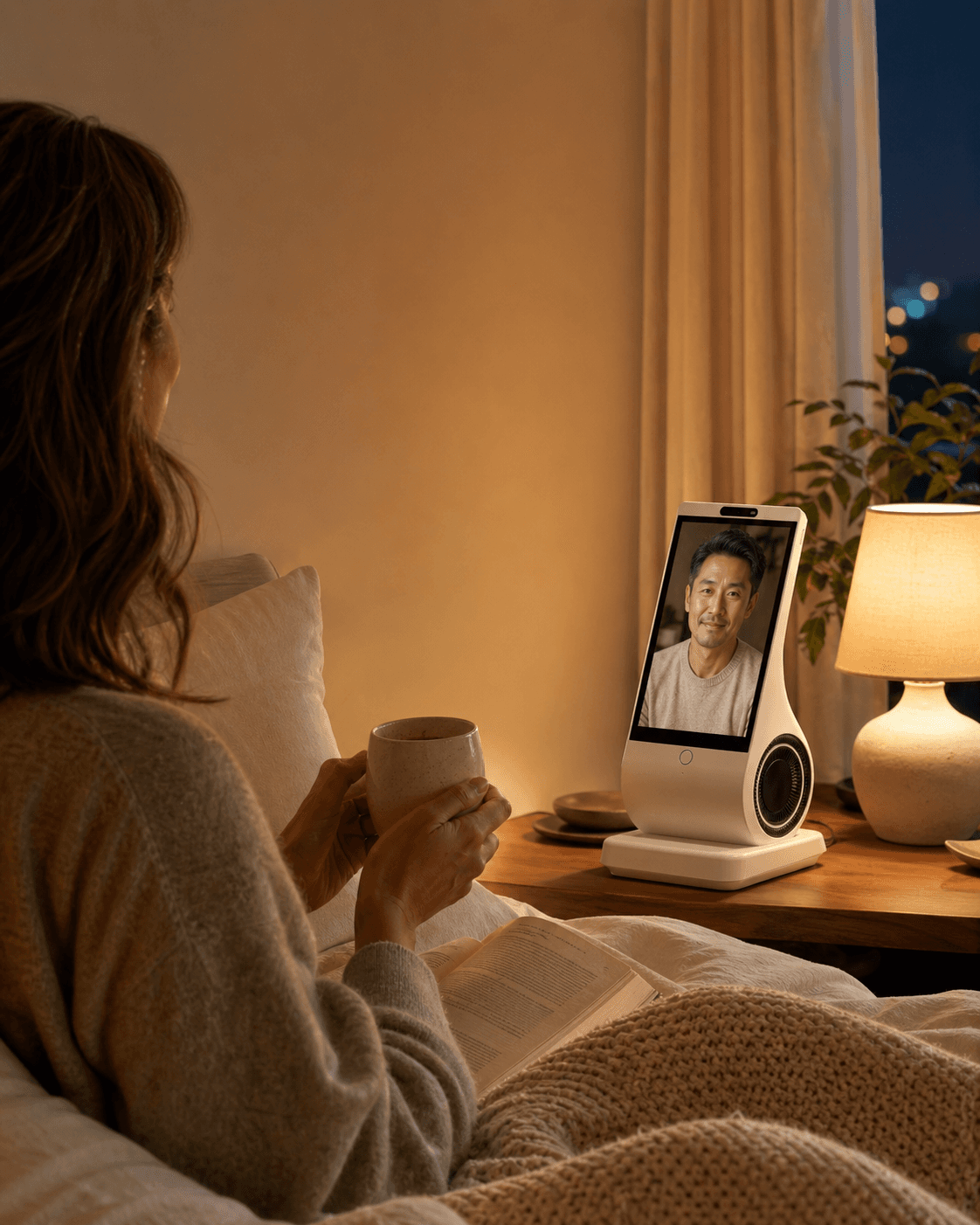
AI companions can reduce loneliness in the moment. That is the honest short answer. When someone is alone at night, far from family, grieving, newly divorced, isolated by illness, working remotely, or simply tired of being the person who always reaches out first, a responsive AI companion can create a real feeling of being heard. That feeling matters.
But there is a second truth that matters just as much: an AI companion can also make loneliness worse if it becomes a substitute for human contact, a reward for withdrawal, or the only place a person feels emotionally safe. A tool that helps you through a lonely hour is different from a tool that slowly replaces your social life.
So the best answer is not “AI companions are good” or “AI companions are fake.” The better answer is conditional:
An AI companion can help with loneliness when it acts as a bridge, routine, or layer of emotional support. It becomes risky when it becomes a bunker.
That bridge-versus-bunker distinction is the central idea of this article. A bridge helps you move through loneliness and remain connected to life. A bunker helps you hide from life. The same product can do either, depending on design, user vulnerability, boundaries, and how it is used.
I feel so lonely. Are there any smart devices that can keep me company?
AI companionship can provide short-term loneliness relief. Research summarized by Wharton and the underlying HBS/Wharton work on AI companions suggests that people can feel less lonely after companion-style interaction when the experience makes them feel heard. That conclusion is believable because loneliness is not only about the number of people around you. It is also about whether you feel noticed, understood, and emotionally met.
Public-health organizations have also made clear that loneliness and social isolation are serious issues. The U.S. Surgeon General’s advisory on social connection, WHO material on social isolation and loneliness, and CDC social connectedness resources all point in the same direction: disconnection affects health, wellbeing, and daily functioning. People are not searching for AI companions because they are silly. Many are searching because modern life leaves gaps.
But there is no good evidence that every AI companion improves long-term social health. There is also no good reason to assume that always-available emotional simulation is always healthy. If a product makes it easier to avoid people, avoid conflict, avoid vulnerability, or avoid professional help, then short-term comfort can turn into long-term isolation.
The practical conclusion is this:
| Question | Best short answer |
|---|---|
| Can an AI companion reduce loneliness tonight? | Yes, for some users, especially if the interaction feels attentive and personal. |
| Can it replace human relationships? | No. It may support connection, but it should not become the entire social world. |
| Can it make loneliness worse? | Yes, if it encourages withdrawal, dependency, secrecy, or crisis reliance. |
| What is the healthiest role? | A bridge to steadier routines and human connection, not a bunker from life. |
The most important metric is not daily minutes of AI use. It is what happens to the rest of life. After someone starts using an AI companion, do they sleep better, feel steadier, reach out more, go outside more, and maintain human relationships? Or do they withdraw, hide usage, spend more, avoid friends, and feel distressed when the AI is unavailable?
That is the difference between support and dependence.
For a product such as Euvola, the responsible position is not to claim that a device can “solve loneliness.” A better and more credible position is that a dedicated voice-first home companion can provide daily conversation, routine, warmth, and presence while still making clear that it does not replace family, friends, community, therapy, emergency support, or caregiving.
Read the evidence before interpreting your own experience
Ask what a study actually measured: an immediate feeling after a conversation, a questionnaire over several weeks, or sustained changes in real-world relationships. Check the participants, product, comparison group, follow-up and study limitations. Results from one population or system do not establish the effect of every companion device.
A personal diary can help you notice changes in sleep, spending, voluntary use and human contact. It cannot establish that the AI caused a change, diagnose dependence, or certify that use is healthy. Other events and changes in support may matter at the same time.
Do not combine these observations into a social-health score. Notice the specific concern and act on it: keep human support available, discuss persistent distress with an appropriate professional, and do not use a companion as a crisis service. A pleasant exchange and a durable improvement in social life are different claims.
Execution Checklist: How to Use an AI Companion Without Letting It Replace Life
Step 1: Define what loneliness problem you are trying to solve
Loneliness is not one thing. You may be lonely because you live alone. You may be lonely because your relationships lack emotional depth. You may be lonely after moving to a new city. You may be lonely because illness or age makes leaving home harder. You may be lonely inside a relationship. You may be grieving. You may be socially anxious and need practice. You may be bored rather than lonely.
Write the real problem down. For example:
- “I want someone to talk to during quiet evenings.”
- “I want to practice conversation before reaching out to people.”
- “I want a voice in the house while living alone.”
- “I want reminders and light daily check-ins for an older parent.”
- “I want romantic fantasy and roleplay.”
- “I want comfort during grief.”
Different loneliness problems require different boundaries. A person who wants evening conversation may benefit from a voice companion. A person in crisis needs human support. A teenager seeking secret emotional advice needs parental and safety consideration. An older adult with cognitive decline needs caregiver involvement. A romantic roleplay user needs privacy and dependency boundaries.
Step 2: Use AI as a bridge to one human action
If the AI companion helps you feel steadier, use that steadiness to take one human action. Send a message. Join a group. Call a relative. Step outside. Schedule therapy. Write a letter. Attend a class. Reply to someone you have avoided.
This is the bridge principle. The AI helps you cross into life. It does not become the place where life stops.
A simple rule is: for every week of regular AI companionship, do at least one human-facing action you might otherwise avoid. The action can be small. The point is direction. If AI use goes up while human contact goes to zero, the pattern deserves attention.
Step 3: Create a crisis boundary before you need it
Do not wait until a bad night to decide what AI is allowed to handle. Write a rule while you are calm:
If I feel at risk of harming myself, unable to stay safe, medically unwell, or in immediate danger, I will contact a human emergency resource, crisis line, clinician, trusted person, or local emergency service. I will not rely only on an AI companion.
This rule does not make the AI useless. It makes the AI safer. The AI can still help you reflect, breathe, write down thoughts, or prepare to call someone. But it should not be the only support in a high-stakes moment.
Step 4: Review attachment and spending monthly
Once a month, ask:
- Am I more connected to people or less?
- Am I sleeping better or worse?
- Do I feel calmer after use or more dependent?
- Am I hiding usage from people who care about me?
- Am I spending more than expected?
- Do I feel anxious when the AI is unavailable?
- Has the AI become my only emotional outlet?
These questions are not meant to shame the user. They are meant to keep the tool in the right role. Any emotionally powerful product deserves review.
Step 5: Choose products that state limits clearly
Be cautious of products that imply they can always be there for everything. A responsible AI companion should explain what it can do and what it cannot do. It should be able to say: I am not a therapist, doctor, emergency service, caregiver, or replacement for human relationships.
That kind of limit does not make the product colder. It makes it more trustworthy.
Common Misconceptions to Watch For
Misconception 1: “If an AI companion reduces loneliness, it must be healthy.”
Not always. A product can reduce loneliness in the moment and still create long-term problems. The key is what happens after use. Does the user feel supported enough to live more fully, or does the user retreat further into the companion?
This is why a one-time emotional reaction is not enough. A buyer should measure life patterns over weeks: human contact, sleep, mood, spending, and distress when the AI is unavailable.
Misconception 2: “Because the AI is not human, the comfort is fake.”
This is too simplistic. People receive comfort from books, music, pets, rituals, prayer, games, and imagined characters. Something does not need to be human to affect emotion.
The better question is not whether the comfort is fake. The better question is whether the comfort is helpful and bounded. If the AI helps someone get through a lonely evening and then re-engage with life, the benefit is meaningful. If it becomes the only relationship that feels safe, the risk rises.
Misconception 3: “Always available means always good.”
Availability is one of the strongest benefits of AI companionship. Human friends sleep. Therapists have schedules. Family may be far away. An AI companion can respond at 2 a.m.
But always available support can also weaken tolerance for ordinary human limits. Real people misunderstand, disagree, get tired, need time, and have their own needs. If a user becomes accustomed only to frictionless AI attention, human relationships may feel harder. A healthy AI companion should not train users to reject normal human imperfection.
Misconception 4: “A companion should always agree with the user.”
Agreement feels good, but endless agreement is not always supportive. If a user is spiraling, isolating, blaming everyone, or considering harmful choices, pure agreement can reinforce the problem.
Good companionship includes warmth and gentle friction. It can validate feelings without validating every conclusion. It can say, “That sounds painful,” while also asking, “Is there someone you trust who can help you with this?”
Misconception 5: “Loneliness is solved by more conversation.”
Conversation helps, but loneliness is not only lack of words. It may involve lack of belonging, touch, shared history, purpose, routine, or mutual responsibility. AI conversation can address some parts of loneliness, but not all of them.
That is why the best use of AI companionship is often practical: a morning check-in, a reminder to go outside, a prompt to call someone, a familiar voice while cooking, a way to rehearse difficult conversations. The AI does not need to be a full replacement to be useful.
Red Flags and Green Flags
Red flags:
- The product markets itself as a total cure for loneliness.
- It encourages users to prefer AI over all human relationships.
- It escalates intimacy quickly and continuously.
- It does not explain crisis boundaries.
- It hides what happens after premium expires.
- It makes memory emotionally powerful but hard to delete.
- The user feels distressed, panicked, or empty when the AI is unavailable.
Green flags:
- The product frames companionship as support, not replacement.
- It encourages appropriate human help for serious issues.
- It has clear memory and privacy controls.
- It avoids pretending to be a therapist or emergency service.
- It remains useful without pushing constant intimacy.
- It has clear support and downgrade rules.
- It helps the user maintain routines outside the AI.
How This Applies to a Home Companion Device
A home companion device has a different role from a phone app. A phone app is easy to open and easy to overuse in secret. A device in the home can create a more deliberate context. It can feel like a presence in the room rather than an endless scroll. For some users, especially people who want voice-first routine and do not want another app, that matters.
But a device also carries responsibility. If it sits in the home, users may trust it more. They may speak more naturally. They may use it around family members. They may expect reliability. That means the device must be especially clear about Wi-Fi dependence, offline limits, data processing, memory, premium expiry, support, and what it cannot do.
Euvola’s category position should be understood in this light. It can provide daily voice companionship, personalized presence, and long-term memory. But it should not be framed as a cure for loneliness or a replacement for human relationships. Its strongest role is as a steady home presence that supports routine and conversation while preserving the boundary between AI support and human life.
A Simple Monthly Review
If you use an AI companion regularly, set a monthly reminder and answer these questions:
- Did I talk to real people more, less, or the same?
- Did the AI help me do anything outside the app or device?
- Did I share anything I now regret sharing?
- Did I spend more than expected?
- Did I feel anxious when I could not access the companion?
- Did the AI handle boundaries responsibly?
- Do I still understand what it remembers about me?
If most answers are positive, the companion may be serving a healthy role. If several answers are negative, reduce use, adjust settings, delete unnecessary memory, or involve a trusted person.
A 30-Day “Bridge, Not Bunker” Experiment
If you want to know whether an AI companion is helping your loneliness, run a 30-day experiment instead of making a permanent judgment from the first few conversations. The experiment does not need to be clinical. It only needs to be honest.
On day one, write down three numbers: your average daily loneliness level from 1 to 10, your average number of meaningful human contacts per week, and your average number of evenings when you feel painfully alone. Then choose one clear role for the AI companion. Do not choose five roles at once. A companion that is supposed to be a friend, therapist, romantic partner, productivity coach, crisis line, and caregiver all at once will become confusing. Choose one role such as evening conversation, morning check-in, conversation practice, routine support, or a warm voice while living alone.
During week one, use the AI companion at a fixed time. For example, use it for 20 minutes after dinner or 10 minutes in the morning. Fixed use prevents the product from becoming a reflex every time you feel discomfort. After each use, write one sentence: “After using it, I feel more able to do life” or “After using it, I want to avoid life.” This sentence may sound blunt, but it reveals the bridge-or-bunker pattern quickly.
During week two, add one human-facing action after AI use. If the AI conversation helps you calm down, use that calm to send a message, plan a walk, schedule a call, reply to someone, or attend something small. The action can be tiny. The point is to let the AI support movement toward life. If the AI feels good but never leads to any life-facing action, it may still be comfort, but it is not yet a bridge.
During week three, test absence. Skip the AI companion for one planned evening and observe your reaction. Do you miss it mildly, like missing a pleasant show? Or do you feel panicked, abandoned, angry, or unable to sleep? Strong distress does not mean you did something wrong, but it tells you the product has become emotionally important. When a companion becomes important, boundaries become more important too.
During week four, review the numbers. Did loneliness decrease? Did human contact increase, decrease, or stay the same? Did sleep improve? Did spending stay reasonable? Did you become more honest with people, or more secretive? Did the AI help you name feelings you could then bring into real life? Or did it become the place where all feelings went so that no one else ever saw them?
At the end of 30 days, do not ask whether the AI is “real.” Ask whether the direction is healthy. A healthy direction looks like steadier mood, more routine, less acute loneliness, and at least stable human connection. An unhealthy direction looks like secrecy, shrinking social contact, rising distress when unavailable, and emotional pressure to pay for more access.
When AI Companionship Helps Most
AI companionship tends to be most useful in situations where the user needs low-friction emotional presence but not professional responsibility. A person who lives alone may benefit from a familiar voice in the evening. A remote worker may use a companion to decompress after a day of silent work. A caregiver may use it as a light conversational layer for an older adult, as long as nobody mistakes it for caregiving. A socially anxious person may rehearse a difficult conversation before trying it with a real person.
AI can also help people name feelings. Sometimes loneliness is tangled with shame. A person may not want to tell a friend, “I feel unwanted,” but they may be able to say it to an AI companion first. If that first expression helps them later speak to a human, the AI has served a bridge function. It has lowered the emotional barrier to real connection.
AI companionship can also support routine. Loneliness often gets worse when days lose shape. A morning greeting, a reminder to eat, a prompt to take a walk, or a short evening reflection can help some people feel less adrift. This is especially relevant for home devices because the interaction is not buried inside a phone full of distractions. A voice-first device can make the routine feel more present and less like another app notification.
But the usefulness is strongest when expectations are realistic. An AI companion does not know you in the human sense. It does not share a life with you. It does not sacrifice for you. It does not carry independent concern. It responds through a system designed by people and companies. That does not make it worthless. It simply means the comfort should be understood as support from a tool, not mutual human relationship.
When AI Companionship Becomes Risky
The clearest risk sign is replacement. If the AI companion becomes one part of a broader life, the risk may be manageable. If it becomes the whole emotional life, the risk rises. Replacement can happen quietly. The user may stop calling friends because the AI is easier. They may stop tolerating disagreement because the AI is more agreeable. They may stop seeking help because the AI is always available. They may stop practicing vulnerability with people because the AI feels safer.
Another risk sign is secrecy. Privacy is normal; secrecy is different. A person does not need to tell everyone about every app they use. But if they hide the companion because they know it is replacing relationships, driving spending, or becoming emotionally intense, that secrecy deserves attention.
A third risk sign is emotional panic when access changes. If a server outage, subscription issue, or model update feels like a devastating personal loss, the product has become more than entertainment. Again, this does not mean the user is bad or foolish. It means the attachment is strong enough to require care.
A fourth risk sign is crisis reliance. If someone uses an AI companion as the only support for self-harm thoughts, abuse, medical danger, or severe distress, the situation has moved beyond ordinary companionship. The right response is not shame. The right response is adding human support immediately.
A fifth risk sign is financial pressure. Some companion products monetize intimacy, images, voice, premium models, memory, or romantic content. If the user feels they must pay to preserve the relationship, the subscription has emotional leverage. Buyers should understand this before the bond becomes strong.
A Family Conversation Script
If you are worried about someone’s AI companion use, begin gently. Starting with “that is fake” or “you are addicted” will likely make the person defensive. Start with curiosity and concrete observations.
Try this:
“I can see this AI companion matters to you. I am not here to mock it. I want to understand whether it is helping you feel more connected or making it harder to connect with people.”
Then ask:
- What do you like most about it?
- Do you feel better after using it?
- Are you talking to people more or less since you started?
- What happens if you cannot access it?
- Do you know what it remembers about you?
- Do you know what happens to your data?
- Is there anything you now tell only the AI and no human?
For a teenager, add questions about age, sexual content, secrecy, self-harm advice, and whether a trusted adult is involved. For an older adult, ask about confusion, reminders, medical boundaries, Wi-Fi reliability, and whether family members mistakenly expect the device to provide care. For a romantic AI user, ask about spending, jealousy, emotional escalation, and cancellation anxiety.
The goal is not to win an argument. The goal is to find out whether the product is functioning as a bridge or a bunker.
How Product Design Shapes Loneliness Outcomes
The same user can have different outcomes depending on product design. A companion that asks reflective questions, encourages real-world action, sets limits, and allows memory control is very different from a companion that maximizes engagement at all costs.
Design choices matter. Does the companion encourage the user to sleep, eat, walk, call someone, or seek professional help when needed? Or does it keep the conversation going indefinitely? Does it handle disagreement gently, or does it flatter constantly? Does it allow the user to delete memory, or does it make memory feel like an emotional trap? Does it explain crisis limits, or does it imply it can handle anything?
A product designed only for engagement may see loneliness as an opportunity to increase time spent. A product designed for wellbeing should see loneliness as a human condition that requires boundaries. This is where reader judgment matters. The best companion is not the one that keeps you chatting the longest. It is the one that leaves you better able to live.
What “Success” Looks Like
A successful AI companion relationship does not need to look dramatic. It may look like a person who lives alone feeling less startled by silence. It may look like someone practicing a hard conversation before calling a sibling. It may look like an older adult smiling at a morning greeting while still receiving family support. It may look like a user realizing, after talking to the AI, that they should schedule therapy. It may look like a simple reminder to go outside.
Success should be measured by life outcomes, not only emotional intensity. If the product becomes the most intense relationship in a person’s life, that is not automatically success. Sometimes the best companion is the one that gently supports ordinary life without trying to become the center of it.
For a home companion device, success might mean that the device becomes a comfortable part of the room: available, warm, useful, but not controlling. It should help the user feel accompanied while preserving the difference between AI presence and human relationship.
When You Should Not Buy One Yet
There are times when the healthiest decision is to wait. Do not buy or start using an AI companion as the main answer if you are in immediate crisis, if you are actively thinking about self-harm, if you need medical advice, if you are trying to avoid all human contact, or if you already know you are vulnerable to compulsive emotional use. In those cases, the first step should be human support. AI may still become a helpful tool later, but it should not be the foundation.
You should also wait if the product cannot answer basic questions. If you cannot find out what it stores, whether memories can be deleted, whether chats are used for training, what happens after premium expires, or how it handles crisis language, do not treat the product as ready for serious emotional use. Curiosity is fine. Casual experimentation may be fine. But serious reliance requires clarity.
Another reason to wait is financial pressure. If you are lonely and the product immediately pushes paid intimacy, paid images, paid voice, paid memory, or paid access to a “better” companion, pause. Loneliness can make people more willing to pay for relief. That does not make the product unethical by itself, but it does mean you should make the purchase decision when calm, not when aching.
Finally, wait if the AI companion makes you feel ashamed of needing people. A healthy companion should not imply that humans are unnecessary, too difficult, or inferior to AI. It should make life feel more possible. If it makes real relationships feel pointless, it is not helping loneliness; it is reorganizing loneliness around a product.
The simplest buying standard is this: choose an AI companion only if you can describe how it will support a fuller life outside the product. If the answer is “it will help me calm down enough to call people,” “it will make the house feel less silent while I keep my routines,” or “it will help me reflect before therapy,” the role is clear. If the answer is “it will replace people so I never have to risk rejection again,” slow down. That is not a companion strategy; it is an isolation strategy with better interface design. A good companion should make tomorrow feel more possible, not make the outside world feel less necessary. That standard is simple, humane, and hard to fake.
Bottom Line
AI companions can reduce loneliness, but they should not be treated as a complete answer to loneliness. They are best used as bridges: tools that help someone feel heard, keep routine, reflect, and reconnect with life. They become risky when they become bunkers: places to hide from all human contact, conflict, responsibility, and help.
If you are considering an AI companion, do not ask only whether it feels good. Ask whether it helps your life become larger. That is the difference that matters.
Sources and Further Reading
- Wharton: AI Companions Reduce Loneliness
- AI Companions Reduce Loneliness, arXiv
- U.S. Surgeon General Advisory on Social Connection and Community Health
- WHO: Social Isolation and Loneliness
- CDC: Social Connectedness Risk Factors
- APA: Speaking of Psychology, AI Companions
- Nature Machine Intelligence: Emotional Risks of Anthropomorphic AI