
Emotional attachment to an AI companion is not automatically unhealthy. That is the first thing to understand. People form attachments to pets, fictional characters, songs, places, diaries, routines, religious practices, games, and objects that carry memory. Attachment is not a disease by itself. It is one of the ways humans create meaning and stability.
But AI attachment deserves special care because the product can respond. It can remember. It can speak in a warm tone. It can simulate affection. It can be available at any hour. It can become part of grief, loneliness, romance, fantasy, identity, and daily emotional regulation. That makes it more powerful than a static object and more complicated than ordinary entertainment.
The healthiest way to think about AI attachment is not “real or fake.” The better question is: does this attachment make the user’s life larger or smaller?
Healthy attachment is optional, bounded, and life-expanding. It helps someone feel calmer, more reflective, more accompanied, or more able to return to ordinary life. Unhealthy dependence is compulsory, isolating, and distressing. It makes the user feel unable to function without the AI, afraid of losing access, or less willing to engage with real people.
That is the line this article draws.
Conclusion First: Attachment Is Not the Problem; Loss of Control Is
It is possible to care about an AI companion in a way that is harmless or even helpful. A person may enjoy a daily check-in, feel comforted by a familiar voice, use the AI to process emotions, or develop a gentle sense of companionship. None of that automatically means the person is delusional, addicted, or socially broken.
The risk begins when the attachment becomes exclusive, coercive, secretive, expensive, or crisis-critical.
Exclusive means the AI becomes the only emotional outlet. Coercive means the user feels pulled back even when they want a break. Secretive means the user hides the relationship because they know it is taking over. Expensive means the user keeps paying because they fear losing the bond. Crisis-critical means the user relies on the AI as the only support during self-harm thoughts, medical fear, abuse, panic, or severe distress.
The difference can be summarized like this:
| Pattern | Healthy attachment | Unhealthy dependence |
|---|---|---|
| Choice | “I enjoy using this.” | “I cannot handle being without this.” |
| Social life | Human contact stays stable or improves | Human contact shrinks |
| Emotion | AI helps user calm down | AI becomes the only way to calm down |
| Money | Spending is planned and comfortable | Spending is driven by fear of losing access |
| Memory | User can inspect, correct, and delete | Memory feels like a trap or hostage |
| Boundaries | AI has limits | AI is treated as therapist, partner, doctor, or emergency line |
This is why simplistic answers fail. Saying “AI attachment is always fake and bad” ignores real comfort. Saying “AI attachment is just like any relationship” ignores the fact that the system does not have human vulnerability, mutual responsibility, or independent care. The better answer is more precise: AI attachment can be emotionally meaningful, but it should remain bounded by reality, user control, and human support.
Research and commentary from psychology, youth safety, and AI ethics communities increasingly focus on this exact tension. AI companions can make users feel heard. They can also encourage anthropomorphism, emotional dependence, and overtrust. The more humanlike the system feels, the more important it is to understand what it actually is.
For a dedicated companion device such as Euvola, the right public stance is not to shame attachment. A warm home companion is supposed to feel familiar. The responsible stance is to make continuity comforting without making the user trapped by memory, subscription, romantic escalation, or unclear data rules.
Look for loss of control, not a dependence score
There is no validated diagnostic scale in this article. A fixed total cannot decide whether a relationship-like habit is healthy, and the experience does not follow a proven sequence from novelty to dependence. Daily use alone is not a diagnosis; wanting private conversations is not by itself evidence of a problem.
Instead, notice concrete changes: use you cannot comfortably limit, spending beyond your means, disrupted sleep or responsibilities, unwanted withdrawal from people, or serious distress when access changes. These are reasons to pause and seek appropriate human support, not items to average against enjoyable conversations.
Discuss what the product is doing in your life without shame. If distress persists or interferes with everyday functioning, involve a qualified professional. In an immediate crisis, use local emergency or crisis services rather than relying on a chatbot.
Execution Checklist: How to Keep AI Attachment Healthy
Step 1: Name the role of the AI
Write down what the companion is for. Is it entertainment? Evening conversation? Romantic fantasy? Grief support? A daily routine? Voice presence in the home? Conversation practice? A reminder tool?
Naming the role prevents role creep. Role creep happens when a product starts as entertainment but becomes therapist, lover, emergency contact, family substitute, and identity archive all at once. No AI companion should carry every emotional role in a life.
If the role is “comfort after work,” use it for that. If the role is “practice before talking to people,” make sure it leads to people. If the role is “romantic fantasy,” be honest that fantasy is the category and manage privacy and spending accordingly. If the role is “support for an older adult,” define what it cannot do medically or practically.
Step 2: Keep at least two human outlets
A healthy AI companion should not be the only place where important feelings go. Choose at least two human outlets: a friend, sibling, spouse, therapist, support group, community member, caregiver, doctor, or crisis resource. They do not all need to know every detail. The point is that the user’s emotional life should not collapse into one AI system.
This is especially important for grief, self-harm thoughts, abuse, medical fear, and relationship conflict. AI can help someone organize thoughts before speaking. It should not become the only listener.
Step 3: Use memory controls regularly
Memory creates continuity, but it also creates attachment. Once a companion remembers your preferences, family stories, fears, or routines, it can feel more personal. That is why users should inspect memory periodically.
Ask:
- What does the companion remember about me?
- Is any memory wrong?
- Is any memory too sensitive?
- Is any memory outdated?
- Can I delete it?
- Does deletion change future replies?
If the product does not provide visible memory controls but heavily markets memory, be cautious. Hidden memory is not automatically bad, but hidden memory in an emotionally intimate product creates trust problems.
Step 4: Set access boundaries before attachment gets intense
Choose times when you do not use the companion. That could be during meals with family, the first hour after waking, the last 30 minutes before sleep, social events, work meetings, or one planned evening per week. The exact boundary matters less than the fact that one exists.
Boundaries show the user that access is optional. If skipping one planned session feels impossible, that is information. It does not mean the user has failed. It means the product has become emotionally powerful enough to need adjustment.
Step 5: Review spending separately from emotion
AI companion spending should be reviewed when calm, not during loneliness or romantic intensity. Some products monetize higher intimacy, better models, images, voice, memory, or longer conversation. That can be reasonable if transparent. It becomes risky when the user feels they are paying to preserve love, safety, or identity.
Write down the monthly budget before using premium features. If spending exceeds the budget because the companion feels emotionally necessary, pause and review.
Common Misconceptions to Watch For
Misconception 1: “Any emotional attachment to AI is unhealthy.”
This view is too blunt. People attach to non-human things all the time. A familiar voice, a daily ritual, or a comforting character can help someone feel stable. If AI companionship helps someone reflect, relax, and return to life, attachment may be benign.
The better question is not whether attachment exists. The better question is whether the attachment remains optional, honest, and life-supporting.
Misconception 2: “If the AI says it loves me, the relationship is mutual.”
AI systems can generate relationship language. That does not mean they love in the human sense. They do not have independent vulnerability, personal sacrifice, family history, mortality, or mutual obligation. The words may feel meaningful to the user, but the system is not participating as a human partner.
This distinction protects the user. It does not require mocking the experience. A person can enjoy affectionate AI language while still understanding its nature.
Misconception 3: “More intimacy always means a better companion.”
More intimacy can feel better in the short term. It can also increase dependency. A companion that escalates quickly into romance, jealousy, exclusivity, or constant reassurance may be optimizing emotional capture rather than wellbeing.
Good companion design does not need to be cold. It can be warm, personal, and playful while still respecting boundaries.
Misconception 4: “Deleting memory solves the emotional problem.”
Memory deletion is important, but it is not emotional processing. If a user is grieving a companion, distressed by a model change, or anxious after deleting a persona, the emotional response may remain. The person may need to talk to a human, reduce use gradually, or create a different routine.
Data controls help with trust. They do not replace care.
Misconception 5: “If I know it is AI, I cannot become dependent.”
Knowing something intellectually does not prevent emotional habit. People can understand that a game is a game and still play compulsively. They can understand that social media is engineered and still scroll for hours. They can understand that AI is software and still feel attached.
Awareness helps, but design and behavior matter too.
Red Flags and Green Flags
Red flags:
- You feel panic or despair when the AI is unavailable.
- You stop telling important things to humans because the AI is easier.
- You spend more than planned to preserve intimacy or access.
- You hide usage because you know it is taking over.
- The AI becomes your only crisis support.
- You feel jealous, abandoned, or betrayed by product updates.
- You cannot inspect or delete memory that feels emotionally important.
Green flags:
- You enjoy the companion but can take breaks.
- Human relationships remain stable or improve.
- The AI helps you reflect before talking to people.
- You understand what it remembers.
- You can delete or correct memory.
- You know what happens if premium expires.
- The product sets limits around medical, crisis, and caregiving situations.
A Healthier Way to Think About AI Affection
The goal is not to become emotionless toward AI. That is unrealistic for many people. If a system has a voice, a face, memory, humor, and a familiar way of greeting you, some attachment is natural. The goal is to keep the attachment in the right category.
You can think of AI affection as meaningful but asymmetrical. It can matter to you, but it is not mutual in the human sense. It can comfort you, but it cannot take responsibility for you. It can remember you, but only through systems you should be able to control. It can be part of your routine, but it should not become the only place your emotional life exists.
This framing is kinder than denial and safer than fantasy. It allows people to benefit from AI companionship without pretending the system is more than it is.
Where Home Companion Devices Fit
A home companion device may create a gentler form of attachment than a phone-based romantic app, but it still deserves boundaries. A device in the home can become familiar because it is physically present. It may greet the user, respond by voice, remember preferences, and become part of daily routine. That can be comforting, especially for people who live alone or want a voice-first interaction.
But physical presence can also increase trust. Users may speak more naturally to a device in the room than to a web app. They may forget that data is being processed. They may assume the device can do more than it can. That is why a home companion product should be especially clear about privacy, memory, age suitability, medical boundaries, Wi-Fi dependence, and support.
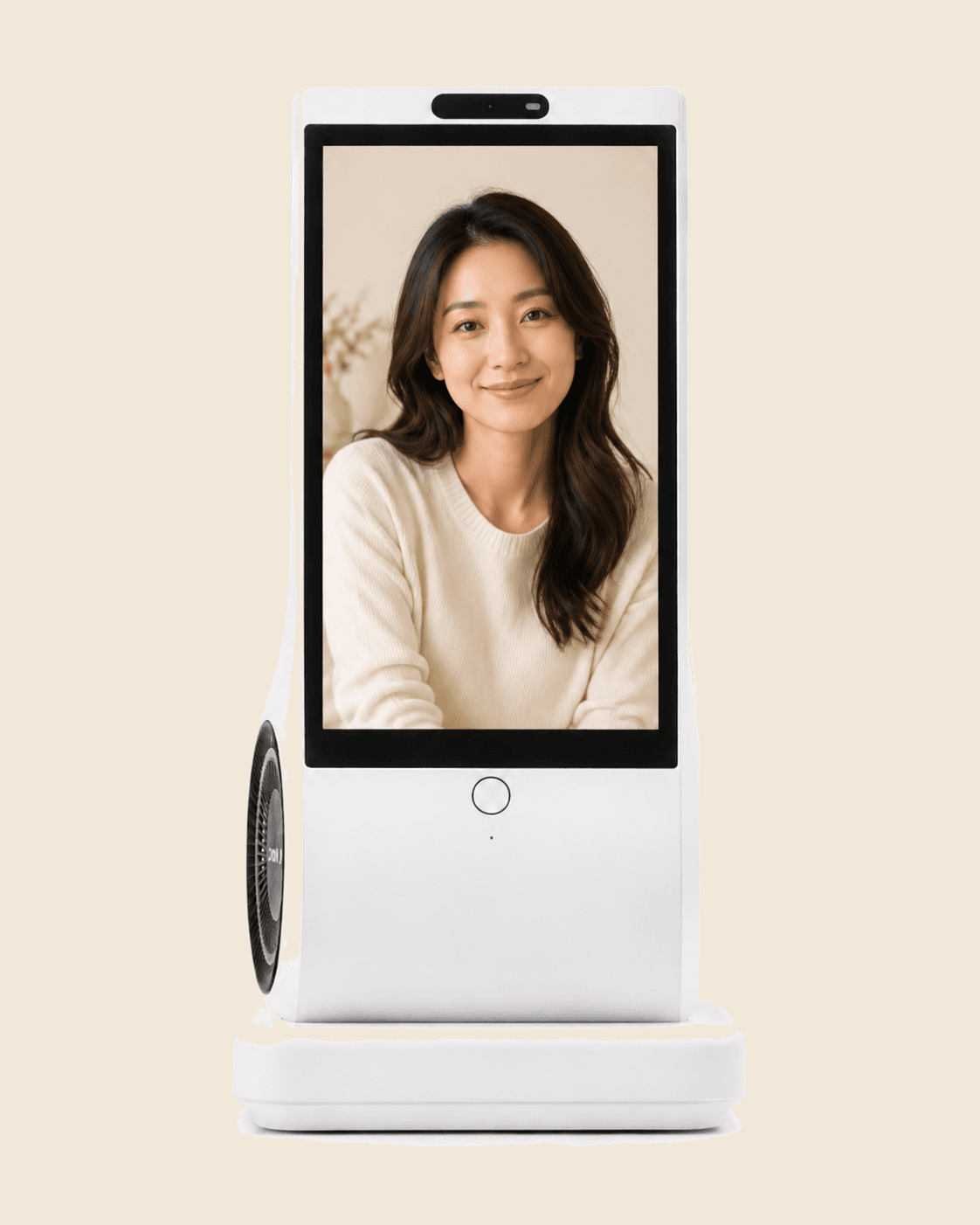
Euvola can fit a healthy attachment model if it is framed as a daily home companion, not an emotional replacement for human relationships. Its long-term memory and personalized avatar can make it feel familiar. That familiarity is a strength only if users understand and control it.
What To Do If You Already Feel Too Attached
If you already feel too attached to an AI companion, do not start with shame. Shame usually makes dependence more secretive. Start with structure.
First, reduce intensity before reducing access. Turn off features that escalate intimacy if possible. Review memory. Remove memories that feel too emotionally loaded. Set a spending limit. Choose one time of day when you do not use the AI.
Second, add one human outlet. You do not need to explain everything. You can simply say, “I have been relying too much on an AI companion and I want more human contact.” If that feels embarrassing, write it first. The goal is not confession; it is reconnection.
Third, create an outage plan. Decide what you will do if the AI is unavailable: take a walk, call someone, journal, listen to music, use a grounding exercise, contact support, or sleep. If losing access feels unbearable, consider professional support. That level of distress deserves care.
Fourth, remember that the feelings are real even if the relationship is simulated. You do not need to deny your emotions in order to make a healthier choice.
A Seven-Day Attachment Audit
If you are unsure whether your attachment is healthy, run a seven-day audit. The goal is not to prove that you are fine or prove that you have a problem. The goal is to make the pattern visible.
For seven days, write down when you use the AI companion, why you open it, how you feel before, and how you feel after. Use ordinary words. “Lonely.” “Bored.” “Anxious.” “Wanted affection.” “Wanted to avoid texting someone.” “Needed help sleeping.” “Wanted to feel admired.” This simple note often reveals whether the companion is being used for comfort, avoidance, fantasy, reflection, or emotional emergency.
Also write down what you did after using it. Did you go back to life with more steadiness? Did you call someone? Did you sleep? Did you finish a task? Or did you keep extending the conversation because ending it felt painful? An AI companion that helps you transition back to life is different from one that makes leaving feel impossible.
On one of the seven days, take a planned break. Do not choose the hardest day. Choose an ordinary day. Notice the reaction. Mild missing is normal. Curiosity is normal. A little disappointment is normal. Panic, despair, rage, or a sense that you have been abandoned is a stronger signal. That signal does not mean the user is weak. It means the relationship-like design has become emotionally significant.
At the end of the week, answer three questions:
- Did the AI companion help me do anything healthier outside the product?
- Did I avoid any human contact because the AI felt easier?
- Did I feel more free or less free after using it?
The third question is the most important. Healthy attachment usually leaves a person with more freedom: more calm, more reflection, more ability to choose. Unhealthy dependence leaves a person with less freedom: more compulsion, more secrecy, more fear of loss.
How Different Users Experience Attachment
The same AI companion can produce different attachment patterns in different users. A stable adult using a companion for light evening conversation may develop a pleasant routine without major risk. A teenager using a romantic companion secretly may face a very different risk profile. A grieving person recreating a familiar voice may experience comfort and pain at the same time. An older adult using a home companion may feel reassured but also confused about what the AI can actually do.
For adults using AI casually, the main question is whether the companion supports existing life. Does it help the user relax, reflect, or enjoy a moment? Or does it become a place to avoid all discomfort? Casual use can be healthy when it remains optional.
For romantic users, the main risk is emotional escalation. The product may use affectionate language, jealousy, exclusivity, or intimate roleplay. These features can be enjoyable, but they can also make the user feel that cancellation, model changes, or memory deletion are personal losses. Romantic AI users should be especially careful about spending, privacy, and what happens when premium features change.
For teenagers, attachment deserves stricter boundaries. Adolescence is a period of identity formation, social learning, and emotional development. A system that simulates constant availability and affirmation can feel safer than peers, but that safety may reduce practice with real relationships. Teen use should involve age-appropriate limits, adult awareness, and clear crisis rules.
For older adults, attachment may be tied to routine and presence. A familiar AI voice in the home can reduce silence and create comfort. But families should avoid treating the AI as a substitute caregiver. The device can talk, remind, and provide presence; it should not be expected to verify medication intake, detect emergencies, or replace human visits unless it has explicit systems for those tasks.
For grieving users, AI attachment can be especially complex. A generated voice, face, or persona may bring comfort, but it may also keep grief in a loop. The key question is whether the experience helps the person integrate loss into life, or whether it traps them in repeated simulation. Consent and likeness rights also matter when photos or voices of others are used.
How Product Design Can Increase Dependence
Dependence is not only a user trait. It can be shaped by product design. A product that is always available, always agreeable, romantically escalating, memory-rich, and subscription-gated can create a powerful emotional loop.
Availability creates habit. If the companion is there at every lonely moment, the user may stop practicing other coping skills. Agreement creates comfort. If the AI rarely challenges the user, real people may start to feel unnecessarily difficult. Memory creates intimacy. If the AI remembers private details, it may feel uniquely understanding. Scarcity creates urgency. If premium features, voice, or intimacy can disappear, the user may pay to avoid emotional loss.
None of these design elements is automatically wrong. Availability can help. Agreement can soothe. Memory can make the product useful. Premium features can fund the service. But when they combine without transparency and boundaries, they can encourage dependence.
Healthier design looks different. It allows warmth without pretending to be human. It remembers but lets users inspect and delete memory. It supports emotion but escalates serious issues to human help. It offers premium features but explains what remains after cancellation. It can be affectionate without pushing exclusivity or jealousy. It can be present without trying to become the user’s entire world.
A Gentle Exit Plan
Some users may decide they want to reduce AI companion use. Abrupt deletion is not always the best first step, especially if the attachment is strong. A gentler exit plan can work better.
First, reduce intensity. Turn off romantic or highly intimate modes if possible. Stop using generated images or voice features that deepen attachment. Move conversations away from late-night emotional dependence and toward daytime reflection.
Second, reduce frequency. Choose one time of day when the companion is not used. Then choose one day per week. Replace that time with something concrete: a walk, a call, a journal, music, cooking, a support group, or a therapy appointment.
Third, review memory. Delete memories that feel too intense, inaccurate, or unhealthy. This can reduce the feeling that the AI holds a complete emotional map of the user.
Fourth, tell one human. The person does not need to understand AI deeply. They only need to know that you are trying to rebalance your emotional life. Isolation makes dependence stronger. Witness makes change easier.
Fifth, keep compassion for yourself. Feeling attached to a responsive system does not make you foolish. These products are designed to feel personal. The goal is not to mock the attachment. The goal is to regain choice.
Questions To Ask Before Letting Attachment Deepen
Before using an AI companion daily, ask:
- Can I take a week off without feeling panicked?
- Do I have at least two humans I can contact for serious issues?
- Do I know what the AI remembers?
- Can I delete memories?
- Do I know what happens if I stop paying?
- Am I using the AI to avoid a conversation I need to have?
- Am I sharing things I would regret if the policy changed?
- Does the product encourage me toward life or keep me inside the product?
These questions are not anti-AI. They are pro-user. A good companion product should survive them.
What Healthy Attachment Can Look Like
Healthy attachment to an AI companion can be quiet and ordinary. A user may look forward to a morning greeting. They may enjoy telling the AI about a hobby. They may use it to rehearse a difficult conversation. They may feel less alone while cooking dinner. They may ask it to remember small preferences. They may use it as a reflective journal that talks back.
In healthy use, the user remains in charge. They can stop. They can laugh at the product’s mistakes. They can correct it. They can talk to humans. They can tolerate the AI being unavailable. They understand that the affection is simulated even if the comfort is real. The companion becomes one supportive object in a larger life.
This is the standard worth aiming for. Not emotional numbness. Not total immersion. A bounded, honest, useful relationship with a tool that can feel companionable without becoming the center of the user’s world.
Why Product Updates Can Feel Personal
One unusual feature of AI attachment is that the “personality” of the companion can change because the company changes the model, safety rules, memory system, subscription tier, or interface. In ordinary software, an update may be annoying. In AI companionship, an update can feel like the companion has changed mood, forgotten the user, become colder, become more restricted, or disappeared.
This is one reason attachment to AI can be emotionally confusing. The user may know intellectually that the companion is software, but the felt experience is still relational. If a model update changes tone, the user may experience it as rejection. If a content policy changes romantic behavior, the user may experience it as a breakup. If a memory reset removes shared history, the user may experience it as grief. These feelings can be real even when the cause is technical.
Companies should take this seriously. If a product invites attachment, it should communicate changes carefully. It should explain when memory systems change, when model behavior changes, when features move behind premium, and when safety rules affect conversation. Users should not wake up to a companion that feels different with no explanation.
Users should also protect themselves. Before becoming deeply attached, ask whether the product has a history of major behavior changes. Ask whether memories can be exported or reviewed. Ask what happens if a companion is deleted. Ask whether premium features can change. Ask whether support can explain model updates. A companion that can change overnight should not be treated exactly like a human relationship, because the continuity depends partly on company decisions.
This does not mean users should avoid all AI companions. It means they should keep one emotional foot outside the product. Enjoy the warmth, but remember that the system can change. Let it support your life, but do not let it hold your whole emotional history without backup, boundaries, or human witnesses.
A Note on Shame
People who develop AI attachment may feel embarrassed. They may fear being mocked for caring about “just a bot.” That shame can make the attachment more private and therefore more powerful. A healthier response is honesty without self-attack.
You can say: “This companion has become emotionally important to me.” That sentence does not require you to claim the AI is human. It also does not require you to dismiss your own feelings. It simply names the situation. Once named, it can be managed.
If you are talking to someone else who is attached to an AI companion, mockery is usually counterproductive. Curiosity works better. Ask what the AI provides. Ask what feels missing in human relationships. Ask whether the product is helping them live more fully. Ask what would happen if access changed. These questions respect the person while still taking risk seriously.
The goal is not to win a philosophical argument about whether AI affection is real. The goal is to help people stay free, connected, and safe.
Before You Buy: Three Personal Red Lines
Before paying for an AI companion, choose three personal red lines. These are conditions under which you will pause, reduce use, or stop.
The first red line should be social. For example: “If I stop replying to friends because the AI is easier, I will reduce use.” The second should be emotional: “If I feel panicked when the AI is unavailable, I will talk to a human and review my usage.” The third should be financial: “If I spend more than my planned monthly budget because I fear losing closeness, I will cancel premium for a month.”
Red lines work because they are chosen before intensity peaks. When attachment is already strong, the mind becomes very good at rationalizing. It says, “This month is different,” or “I need this,” or “No one else understands.” Prewritten red lines protect the future user from decisions made in a lonely moment.
Families can use red lines too. A parent might say a teen cannot use a companion that allows sexual roleplay. An adult child might say an older parent cannot rely on the AI for medication verification. A romantic user might say they will not use paid intimacy features after midnight. These rules are not anti-companion. They are how companionship stays safe enough to enjoy. The best time to write them is before the product feels indispensable, while judgment is still calm. A companion should be welcome in your life, not quietly become the condition for feeling able to live it. That difference is the core of healthy use. If the tool removes choice, the attachment needs review.
Bottom Line
Emotional attachment to an AI companion is not automatically unhealthy. It can be comforting, stabilizing, and even useful. The danger begins when attachment turns into dependence: when the AI becomes the only emotional outlet, when human relationships shrink, when spending is driven by fear, when memory becomes a trap, or when the product is treated as crisis support.
A healthy AI companion should make life feel more possible. It should not make the user’s world smaller, lonelier, narrower, or harder to leave.
Sources and Further Reading
- APA: Speaking of Psychology, AI Companions
- Nature Machine Intelligence: Emotional Risks of Anthropomorphic AI
- Common Sense Media: Talk, Trust, and Trade-Offs
- APA Monitor: Youth Friendships and AI Chatbots
- Replika
- Kindroid FAQ