
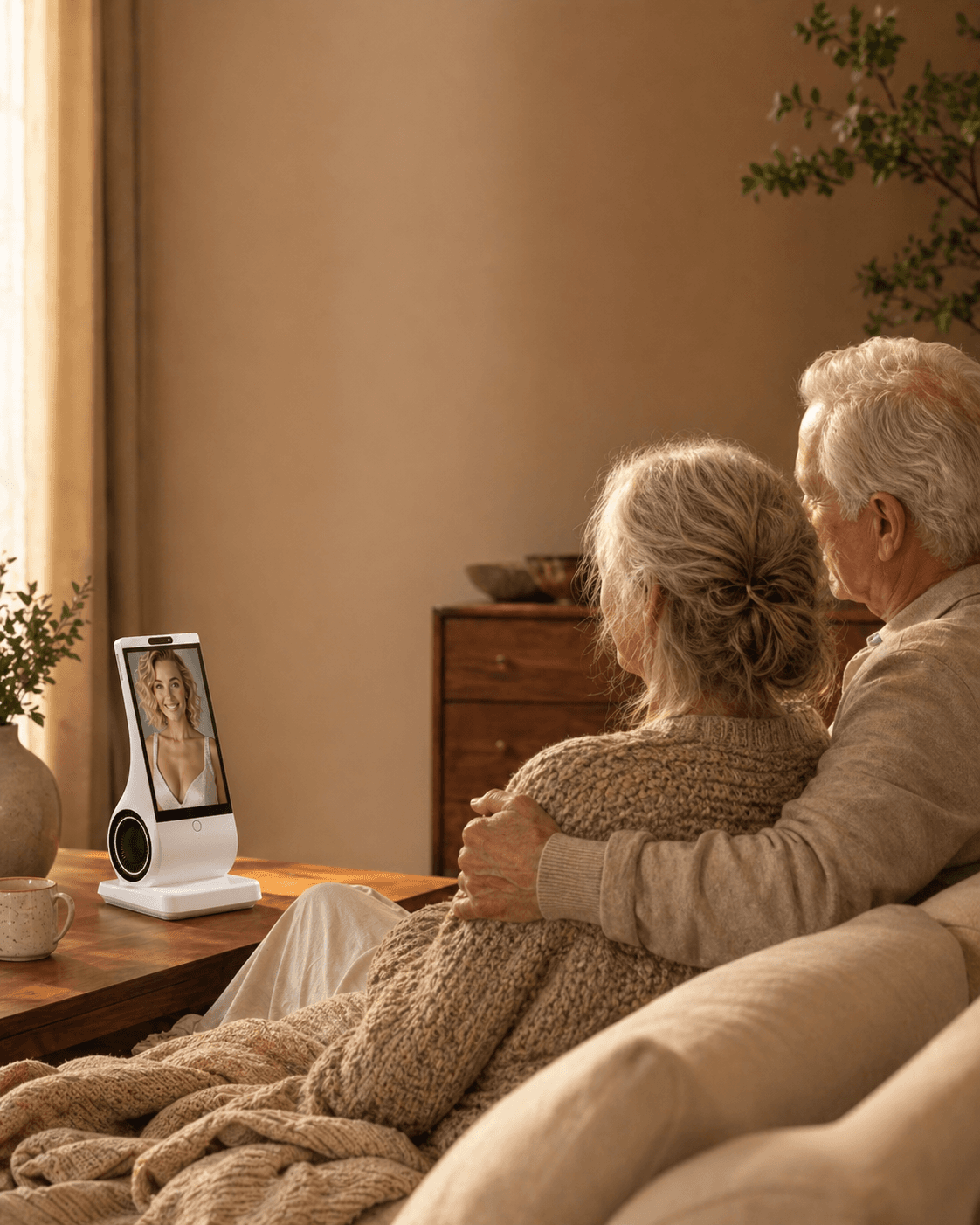
Stop trying to win the argument. Take the loneliness seriously, accept that your parent can refuse your solutions, and find out what makes each option unacceptable. Look for the smallest form of contact they would choose, remove one practical barrier, and run a short, reversible trial. Keep a realistic family schedule. If hopelessness, self-neglect, sudden withdrawal, or talk of death appears, involve a qualified person rather than offering another activity or device.
Reviewed and updated: September 12, 2026
When every answer is “no”
The call often begins with the same sentence: “I’m so lonely.” You suggest lunch at the senior center. No. A neighbour has offered to visit. No. Move nearer to the family? Absolutely not. Try a class, a church group, a video call, a volunteer driver, a pet, or a companion device? Each idea is dismissed before you finish the sentence. Then the parent asks when you are coming again.
For the adult child, the conversation produces a bruising mixture of love, guilt, irritation, and helplessness. You may be driving hours, calling regularly, managing appointments, and raising children or working a demanding job. Still, the complaint lands as evidence that you are failing. For the parent, the suggestions may sound equally painful: leave the home you chose, spend time with strangers, admit that you need help, learn unfamiliar technology, or accept an activity designed for somebody else’s idea of old age.
Both people can be telling the truth. The parent may genuinely feel lonely. The family may genuinely have reached its limit. A solution that ignores either truth will not last.
The useful question is not “How do I make my parent socialize?” It is “What kind of connection is missing, what makes the offered options feel wrong, and what is the smallest change my parent would choose?” That shift sounds modest. It changes the conversation from persuasion to diagnosis in the ordinary, non-medical sense: learning what problem you are actually trying to solve.
“Lonely” can describe four different gaps
Loneliness and social isolation are related, but they are not interchangeable. The World Health Organization’s explanation of social connection separates the structure of relationships, the support those relationships provide, and their quality. The CDC likewise describes social connection through the size and variety of a network, the functions it serves, and whether the relationships feel positive or negative.
That distinction matters at the kitchen table. “I am lonely” may mean at least four different things.
The house is too quiet
A person may want voices, movement, and something responsive during long afternoons without wanting a new friendship. Radio, television, an audiobook, a smart speaker, a robotic pet, or an AI conversation can change the atmosphere. This is a need for presence or stimulation. It deserves respect, but it is not the same as building a reciprocal relationship.
I miss one particular person or role
A widowed parent may miss a spouse, not “people” in general. A retired teacher may miss being useful. Someone who stopped driving may miss spontaneous errands and the identity that came with choosing where to go. A generic social calendar can feel insulting when it fails to name the loss. The answer may involve grief support, a meaningful role, transport, or familiar company rather than more entertainment.
I have people around me but do not feel known
An older adult can be lonely in a crowded residence, at a family dinner, or during a daily phone call. More contact does not guarantee better contact. If every conversation is about blood pressure, groceries, and appointments, the parent may have plenty of care administration and very little adult relationship. Our guide to talking with an older parent beyond health updates addresses that specific pattern.
My world has become too small
Social isolation is about the network itself: few contacts, few roles, limited transport, or no one nearby who would notice a change. A device may provide conversation while leaving that structural gap untouched. A family should not read cheerful use of technology as proof that the parent has neighbours, practical support, transport, or someone who can respond in person.
These gaps can overlap. The first task is not to select a product. It is to ask which gap hurts today. A parent who says, “Evenings are silent,” is giving you a different starting point from one who says, “Nobody needs me anymore,” or “I cannot hear people at the club,” or “I only want your company.”
A refusal is information, not a personality diagnosis
Families often compress ten rejected ideas into one label: stubborn. That label may express real exhaustion, but it hides the reason the ideas failed. Before offering an eleventh solution, sort the refusal into a more useful barrier.
Identity: “That place is for old people”
The objection may not be to company. It may be to an identity the activity seems to impose. A person who spent forty years running a shop may not want a programme advertised as “keeping seniors busy.” They might accept mentoring a new business owner, helping at a repair café, translating at a community event, or attending a lecture where age is incidental.
Do not argue that they are old enough for the senior center. Ask what role still feels like them. A group organized around birds, local history, gardening, cards, faith, music, politics, former work, or a language may be easier to enter than a group organized around age.
Access: “I don’t want to go” may mean “I can’t manage it”
The route may require night driving, stairs, a long walk from the car, a hearing loop that does not work, a toilet that is hard to reach, or a smartphone sign-up. A parent may hide the barrier because explaining it feels humiliating. Hearing loss can make a busy room exhausting. Pain can make an hour-long activity feel endless. Fear of falling can appear as disinterest.
Ask about the journey minute by minute: getting dressed, leaving the house, transport, finding the room, hearing the conversation, using the bathroom, paying, and getting home. Remove one obstacle before concluding that the activity itself was rejected.
Social risk: strangers are work
“Go make friends” sounds simple to the person who already has friends. Walking into a room of established groups can involve rejection, embarrassment, small talk, and the effort of remembering names. A recently bereaved person may be tired of explaining what happened. Someone whose speech, hearing, mobility, or memory has changed may fear being exposed.
Lower the social temperature. One neighbour at the kitchen table, a regular library volunteer, a short call with an old colleague, or attending the first ten minutes with a family member can be more realistic than a crowded lunch. The goal is not maximum attendance. It is an acceptable first contact.
Fit: the family likes the idea more than the parent does
Adult children frequently suggest activities they would enjoy: exercise classes, crafts, book clubs, video calls. A parent who never liked organized groups at fifty is unlikely to become a joiner at eighty. A quiet life is not automatically a failed life. The parent may want two dependable relationships, not a full calendar.
Ask for a description of a tolerable afternoon rather than a list of hobbies. “Would you rather talk, make something, watch something with another person, help someone, or go somewhere?” is easier to answer than “What hobby do you want?”
Timing: the idea arrived on the wrong day
A good option can fail when it is proposed during an argument, immediately after a loss, in the middle of an illness, or as the family is rushing out the door. Novelty takes more effort when a person is tired. A parent may also hear urgency as a threat: accept this activity or we will make you move.
Separate exploration from pressure. Write down an option and return to it when nobody needs an immediate yes. A refusal today is not always a permanent refusal; it is still a refusal today.
Trust: accepting help feels like surrendering control
An offer may carry hidden conditions. A companion visitor might report back to the children. A device might listen, store conversations, or let family members monitor the home. A transport service might feel like the first step toward taking away the car. If the parent suspects that “company” is surveillance in softer packaging, resistance is rational.
State the boundaries plainly. Who will know what? Who can stop the service? What data is stored? Can the parent choose the visitor, time, room, and duration? For connected products, the UK Information Commissioner’s Office guidance for consumer IoT is a useful reminder that transparency, data minimization, and meaningful control belong in the decision.
Power: the suggestion is really a demand
Families sometimes ask, “Would you like to try this?” after buying it, booking it, or telling everyone the plan. That is not a choice. Neither is offering two options when both communicate, “You are now our problem to solve.”
Restore the right to say no. It may feel counterproductive, yet voluntary use is the only use that tells you whether an option fits. Compliance to protect a child’s feelings is not engagement. A device gathering dust may be less a technology failure than an honest answer that was not heard during the purchase.
Replace the sales pitch with three questions
The next conversation does not need twenty ideas. It needs room for three answers.
First ask, “When is the loneliness worst?” A specific time and situation turns an unlimited problem into a visible gap: Sunday afternoon, after dinner, when a television programme ends, during bad weather, or when a familiar person used to call.
Then ask, “What do you miss in that moment?” The answer might be another voice, being asked for an opinion, having somewhere to go, being useful, physical presence, touch, laughter, or knowing that somebody would notice an emergency. No single intervention supplies all of those things.
Finally ask, “What is one thing you would be willing to try once, even if you never do it again?” The phrase “once” matters. It removes the lifetime contract hidden inside many family suggestions.
If the answer is “nothing,” do not start a courtroom cross-examination. Say what you can offer, what you cannot offer, and when you will ask again. Respecting a no does not require making yourself available without limit.
Match the option to the job
Evidence does not point to one universal loneliness remedy. A 2025 network meta-analysis of interventions for community-dwelling older adults included varied populations and programmes. Its synthesis favored combinations—individual and group formats, and face-to-face and online contact—over the fantasy that one mode fits everyone. A newer systematic review of post-pandemic interventions found that analogue, community-based approaches often performed better than technological ones in the included studies. Differences among studies, participants, settings, and measures mean these results are a direction for judgment, not a prescription for your parent.
Compare options by the missing job, not by novelty.
A dependable family contact
Family calls and visits offer shared history, reciprocity, practical action, and affection. They are also limited by distance, work, health, and other relationships. The honest version is a schedule that can be kept: perhaps two shorter calls and one weekend visit, not a promise to “call whenever” followed by resentment.
Best for: maintaining an existing relationship. Poor fit for: becoming the parent’s entire social network or providing round-the-clock reassurance.
One-to-one local contact
A neighbour, volunteer visitor, faith-community member, paid companion, former colleague, or regular service worker can be less intimidating than a group. Repetition matters: seeing the same person creates familiarity. Check safeguarding, reliability, cost, and what the person is actually contracted or volunteering to do.
Best for: a parent who dislikes groups but accepts a known person. Poor fit for: skilled care unless the person is qualified and assigned that role.
A group built around a shared purpose
Libraries, walking groups, choirs, repair cafés, classes, volunteering, cultural associations, and faith communities can supply both activity and recurring human contact. The CDC’s suggestions for improving social connectedness emphasize varied relationships, shared interests, giving and receiving support, and addressing barriers.
Best for: someone who wants a role or common subject. Poor fit for: a person who feels forced into an age label, cannot access the venue, or is overwhelmed by a large room.
A live animal or robotic pet
A live animal can offer touch, routine, affection, and contact with other people, but also feeding, walking, cleaning, veterinary costs, and contingency planning. A robotic pet reduces those duties and may provide tactile company, yet it does not create mutual human support. Neither should be given as a surprise.
Best for: a person who wants animal-like presence and can manage the relevant responsibilities. Poor fit for: someone who does not like animals, is frightened by movement or sound, or cannot safely care for a live pet.
Passive company
Radio, audiobooks, television, music, and familiar programmes can make the house feel inhabited. They are cheap, predictable, and easy to stop. They do not pretend to be relationships. Shared listening can also become a reason to call somebody later.
Best for: silence, boredom, or a comforting routine. Poor fit for: someone asking to be heard or needing practical support.
An AI companion
An AI companion can offer responsive conversation without asking another person to be available. Research on older adults and social robots is promising but not uniform. A 2025 meta-analysis of social robots and loneliness in later life pooled 19 studies and found reductions in loneliness, while also reporting important differences by setting and study design. A 2026 review of AI conversational and socially assistive agents draws from a still-small set of randomized trials. Neither result proves that a particular consumer product will help your parent at home.
Best for: optional conversation during a specific quiet period when the parent wants it. Poor fit for: replacing people, monitoring safety, treating depression, handling a crisis, or resolving the reason every human option is being refused.
Community, clinical, or crisis support
Persistent distress, sudden behavioral change, untreated hearing or vision problems, grief that is overwhelming daily life, or difficulty with basic needs deserves a human route. In the United States, the Administration for Community Living’s Eldercare Locator connects families to local aging services. Other countries have their own municipal, health, social-care, and voluntary-sector routes.
Best for: needs that require assessment, local coordination, safeguarding, or qualified support. Poor fit for: being presented as punishment for refusing a club.
Use the 12-point SMALL test
When your parent is willing to consider one option, score the trial before arranging it. SMALL is a household decision aid, not a clinical scale.
S — Self-chosen: 0 to 3
- 0: The family has decided and the parent is expected to comply.
- 1: The parent can choose between family-selected versions.
- 2: The parent helped shape the option and timing.
- 3: The parent can say yes, no, pause, or stop without losing care or affection.
M — Modest job: 0 to 2
- 0: The option is supposed to “solve the loneliness.”
- 1: It has a broad job such as “keep busy.”
- 2: It has one observable job, such as making Tuesday lunch less silent or providing a ten-minute conversation after dinner.
A — Accessible in real life: 0 to 3
- 0: Transport, hearing, cost, mobility, language, setup, or support is unresolved.
- 1: The family assumes the barrier will be manageable.
- 2: The main barrier has a named fix and backup.
- 3: The parent has tested the actual route, room, voice, controls, duration, and exit.
L — Leads outward: 0 to 2
- 0: The option replaces existing human contact or makes withdrawal easier to ignore.
- 1: Human contact remains unchanged.
- 2: The option creates or protects a human link—a shared topic, a ride, a repeated meeting, a message, or a plan.
L — Low-pressure and reversible: 0 to 2
- 0: Money, guilt, a contract, or family expectations make stopping difficult.
- 1: Stopping is possible but awkward or costly.
- 2: The trial is short, affordable, private, and easy to end.
Add the points: S + M + A + L + L = 12.
- 0–5: Do not start yet. The plan belongs to the family more than the parent, or basic barriers remain.
- 6–9: Revise one weak dimension before the trial.
- 10–12: The option is reasonable to test, but the score predicts fit, not a loneliness outcome.
A perfect score does not mean the parent will like it. It means the family has created a fair experiment.
A two-week “smallest yes” experiment
Long trials hide bad fit behind sunk cost. One cheerful demonstration hides novelty. Fourteen days is long enough to encounter an ordinary day and short enough to remain reversible.
Before day one: write the current pattern
Record only what the parent agrees to discuss. Note the time loneliness is usually mentioned, current dependable human contacts, the family time that can realistically be offered, and the practical barrier the trial is meant to test. Do not secretly score mood, record conversations, or turn family attention into surveillance.
Choose one stop condition. Examples include distress, repeated confusion, sleep disruption, a new drop in human contact, pressure to disclose private information, an unmanageable technical burden, or the parent asking to stop.
Days one to three: test ten minutes, once
The first encounter should be smaller than the sales demonstration. Attend ten minutes of a group, share tea with one visitor, make one short video call, listen to one programme, or have one bounded AI conversation. Let the parent choose the start and the end.
Afterward, do not ask, “Wasn’t that nice?” Ask, “What part was tolerable, and what part would you change?” A person can dislike the room but enjoy the subject, like the visitor but hate the hour, or enjoy the device but find its voice tiring. Those are useful answers.
Days four to seven: remove one barrier
Change one variable, not five. Move the meeting to a quieter table. Arrange door-to-door transport. Shorten the visit. Choose a recurring group where the same people attend. Increase text size. Test the actual hearing aids and room noise. Put a voice device where ordinary conversation happens rather than in a bedroom.
If the parent still says no, stop. The aim is not to wear down resistance through repeated exposure.
Days eight to eleven: look for a human return
Ask whether the trial gave the parent something to bring back to another person: a story, opinion, question, plan, recipe, photograph, joke, or reason to leave the house. For an AI companion, this step is especially important. “I talked to it for two hours” is usage. “It helped me remember a story I wanted to tell my sister” is a bridge.
The return can be tiny. It should not be manufactured as proof that the family’s idea worked.
Days twelve to fourteen: test a missed day and decide
Skip the option once by agreement. Mild disappointment is normal. Panic, a sense of abandonment, or inability to manage the evening deserves attention—particularly with an emotionally responsive product. Then ask three separate questions:
- Does the parent want it to continue?
- Did it do the one modest job?
- Did the rest of life become larger, smaller, or unchanged?
Continue only when the first answer is yes and the other two answers are acceptable. Return a device, cancel a service, or leave a group without calling the experiment a failure. Learning what does not fit is useful.
Set a family boundary that can survive a hard week
Loneliness does not create an unlimited claim on one person’s time. At the same time, a boundary delivered as punishment—“If you refuse the senior center, do not call me”—turns connection into a bargaining chip.
State what is dependable. “I can call Tuesday and Friday after dinner for twenty minutes, and visit on the second Saturday. I cannot answer during work unless it is urgent.” If possible, distinguish urgent needs from wanting company and name the appropriate route for each. Do not promise a schedule that works only in an easy week.
Then stop negotiating the boundary every time the parent rejects an alternative. You can keep offering a respectful choice without taking responsibility for making another adult choose it. This is not abandonment. It is the difference between being part of a social network and being the entire network.
If conflict, old family harm, or caregiver strain makes ordinary boundaries impossible, the useful support may be for the adult child: a caregiver group, counsellor, mediator, social worker, or another trusted person. Buying the parent a device does not repair the family system around it.
An AI companion should be a bridge, not the destination
An AI conversation can be attractive precisely because people are difficult. The system is available, patient, and unlikely to complain that a story has been repeated. For a parent who finds groups tiring or strangers threatening, that lower social risk can make a quiet hour easier.
The same feature can freeze the problem in place. If the family says, “Now Mum has somebody to talk to,” and reduces calls, the device has replaced connection. If the parent uses it instead of every difficult human interaction, the world can narrow while daily conversation minutes rise. Loneliness is not measured by word count.
Before trying one, define an outward link. The companion might help the parent prepare a question for a real appointment, practise what to say to a neighbour, choose a recipe to cook with family, recall a story to share, or make a plan for a library event. It should not claim to have contacted anyone unless the product actually provides and documents that function.
Protect privacy as carefully as you protect human contact. Ask whether conversation audio or text is retained, whether data may be used for model improvement, what memory is created, how to delete it, who can access the account, what happens during an outage, and whether family can see conversations. Do not install a connected microphone in a parent’s home under the label of companionship while privately hoping to monitor them.
Read our guide on family access to an older adult’s AI conversations before treating summaries or transcripts as reassurance. Private conversation does not become family property because the family bought the hardware.
Where EUVOLA may fit—and where it does not
EUVOLA is a dedicated, voice-first AI companion hardware device for home use. It uses a personalized on-screen avatar, has no camera, includes a human presence sensor, and requires Wi-Fi for chatting and service access. It does not currently work offline. According to the current EUVOLA official FAQ, everyday conversation can continue without an active subscription after the included Premium period ends.
For this particular family problem, EUVOLA may fit one narrow job: an older parent personally wants optional voice conversation during a predictable quiet period and does not want to read, type, or open a phone app. The family must still support initial setup, Wi-Fi, placement, and ordinary troubleshooting. A real-home voice trial matters more than a feature list.
It is a poor fit when the parent says no, the buyer wants fewer family obligations, or the real need is transport, human friendship, hearing support, hands-on care, assessment, emergency response, or crisis help. EUVOLA cannot diagnose or treat a condition, provide medical advice, confirm medication intake, notify family about a missed dose, detect a fall, call emergency services, or prove that the parent is safe.
Family messaging, photo sending, conversation viewing, conversation summaries, family accounts, and permission management are not currently available. Remote setup is planned but not available. A buyer who needs any of those functions should not assume that “AI companion” includes them.
EUVOLA may use a photo, short voice sample, conversation audio and text, and long-term memory. The FAQ, rechecked on September 12, 2026, says photos and voice samples are deleted after generation, original conversation audio and text are deleted after model processing, and long-term memory is user-controllable. When model improvement is enabled, photo, voice, and conversation data may be used to improve models; the setting can be turned off. Long-term memory is not used for model training. Review these choices with the parent rather than configuring them on the parent’s behalf.
Common mistakes—and a more useful correction
“If they were really lonely, they would accept help”
Loneliness does not erase taste, fear, pride, fatigue, grief, disability, or the right to refuse. A rejected option proves only that this version, at this time, was unacceptable. Take the feeling seriously without treating acceptance as a test of sincerity.
“I need to keep suggesting things until something sticks”
A rapid list can feel like the family is trying to close a ticket. Ask about the missing kind of connection first. Offer one option, make it small, and leave room for an answer. More ideas are not always more care.
“A full activity calendar would solve it”
Busy is not the same as connected. A parent may attend five events and still feel unknown. Another may prefer one weekly conversation with somebody who remembers them. Judge quality, reciprocity, and choice, not calendar density.
“The senior center is the obvious answer”
It can be an excellent resource, but “senior” may be the wrong identity, the room may be inaccessible, or the programme may not match the person. Try the underlying job elsewhere: recurring contact around an interest, useful work, learning, movement, or a familiar meal.
“A companion device will take pressure off the family”
It may add a voluntary activity. It may also add setup, support calls, privacy decisions, subscription questions, and disappointment. Reduced family pressure is not evidence of improved life for the parent. Measure both separately.
“Daily use means it is working”
Daily use can show enjoyment, habit, lack of alternatives, or dependence. Check human contact, sleep, frustration, willingness to skip a day, and whether the parent’s world is expanding. Engagement is a product metric; a fuller life is a family goal.
“I bought it, so I should be able to see what they say”
Paying for a product does not transfer ownership of another adult’s private conversation. Any sharing should be specific, informed, revocable, and technically real. Do not promise the parent privacy and then seek a hidden route around it.
“If the trial fails, we are back at zero”
A fair trial can reveal that the real barrier is transport, hearing, group anxiety, timing, cost, or a mismatch of interests. That knowledge is progress. The next attempt should address the revealed barrier, not repeat the same plan with more pressure.
When another suggestion is not enough
Do not reduce every change to loneliness. Sudden withdrawal, new confusion, marked changes in sleep or appetite, inability to manage ordinary needs, untreated pain, hearing or vision problems, medication effects, or statements of hopelessness deserve attention from a qualified human. The family does not need to diagnose the cause in order to notice that something has changed.
Talk of wanting to die or self-harm is not a negotiating tactic to be answered with a club, pet, or AI companion. Ask directly, stay present, and obtain help. In the United States, the 988 Lifeline’s guidance for helping someone else explains warning signs and routes to call, text, or chat with 988. If there is immediate danger, contact local emergency services. Outside the United States, use the appropriate local crisis and emergency services.
An AI system should never be the only witness to a crisis. It cannot assess the home, remove a means of harm, provide medical care, or guarantee that a message reaches a person. Preserve an emergency plan that works when the device, Wi-Fi, or model is unavailable.
Five actions for the next seven days
- Ask when and what. Find the time loneliness is worst and the kind of connection the parent misses.
- Name one barrier. Identity, access, social risk, fit, timing, trust, or power—choose the one most likely to explain the current refusal.
- Offer one smallest yes. Ten minutes, one person, one visit, one programme, or one conversation, with a clear right to stop.
- Publish the family boundary. Put dependable calls or visits on a calendar and state when you are unavailable.
- Write the human escalation route. Name who handles health change, practical care, and urgent safety; do not assign those jobs to a companion product.
The point is not to make your parent busy within a week. It is to replace a circular argument with one honest experiment.
Questions families ask
Should I stop asking my parent whether they are lonely?
No. Ask without making the answer a demand that you fix it immediately. “What part of today felt lonely?” is often more useful than “Are you still lonely?” Follow with listening before suggestions. If the parent does not want to discuss it, respect that boundary and return to ordinary conversation.
What if my parent refuses everything but still expects me to visit more?
Say what you can reliably offer and keep it. Do not make your contact conditional on joining a group, but do not promise unlimited availability. You can acknowledge that the remaining loneliness is painful without accepting sole responsibility for ending it.
Is it wrong to leave a parent alone when they say they are lonely?
Living alone, spending time alone, loneliness, and unsafe isolation are different. A capable adult may choose solitude. The question is whether basic needs and safety are covered, whether the parent has meaningful contact they want, and whether distress or functioning has changed. If you are unsure about safety or capacity, involve an appropriate local professional rather than relying on a feeling of guilt.
How do I know whether this is depression rather than loneliness?
You do not need to make that diagnosis. Notice persistent hopelessness, loss of interest, major changes in sleep or appetite, withdrawal, self-neglect, or talk of death and share the change with a qualified health professional. If suicide or immediate harm is a concern, use crisis or emergency help now. A device trial is not an assessment.
What if they say everyone at the senior center is “too old”?
Do not debate the insult. Look for the identity underneath it. A role-based activity—volunteering, teaching, repairing, gardening, language practice, music, faith, or local history—may feel less like being managed. A one-to-one introduction or a short first visit may also reduce the social cost.
Can an AI companion persuade my parent to socialize?
It should not manipulate an adult into the family’s preferred behavior. It may help a willing user rehearse a conversation, choose a topic, or make a plan. The useful outcome is a parent-led human step, not compliance produced by a persuasive machine.
Could an AI companion make isolation worse?
Yes. Risk rises if human calls or visits decrease, the parent stops tolerating ordinary relationships, use becomes secret or distressing, or the family treats AI activity as proof of safety. Set a human-contact floor, an outward link, a review date, and an easy stop before the trial begins.
Should I surprise my parent with a companion device?
No. The surprise turns consent into a reaction to a gift and makes returning it emotionally difficult. Show the actual product, explain its microphone, data, memory, connectivity, cost, and limits, and make “no” or “return it” acceptable outcomes.
What would count as success after one month?
The parent chooses to continue; the option does its modest job; family boundaries remain workable; human contact is stable or stronger; and the parent’s life is not smaller. “Uses it every day” is not enough. A returned device plus a newly understood hearing problem can be a more successful result than high engagement built on the wrong need.
The decision is smaller than “fix the loneliness”
You cannot manufacture another adult’s social life. You can listen closely, stop turning every refusal into defiance, remove a real barrier, offer a choice small enough to be honest, and keep the part of the relationship you can sustain. Your parent can accept or refuse.
If an AI companion enters that arrangement, give it a chair—not the whole room. Let it soften a quiet hour, help prepare a human conversation, or add one chosen routine. Do not let it become evidence that family, neighbours, community, care, or professional help are no longer needed.
Sources and further reading
- World Health Organization: Social connection, 30 June 2025
- CDC: Social Connection
- CDC: Improving Social Connectedness
- Administration for Community Living: Eldercare Locator
- JAMDA: Interventions to Reduce Loneliness among Community-dwelling Older Adults
- BMC Geriatrics: Interventions against loneliness and social isolation in older adults
- The Gerontologist: Wired for companionship, a meta-analysis of social robots
- BMC Geriatrics: Effectiveness of AI-based conversational and socially assistive agents
- 988 Lifeline: Help Someone Else, United States
- ICO: Guidance for consumer Internet of Things products and services
- EUVOLA: Official FAQ and current product boundaries